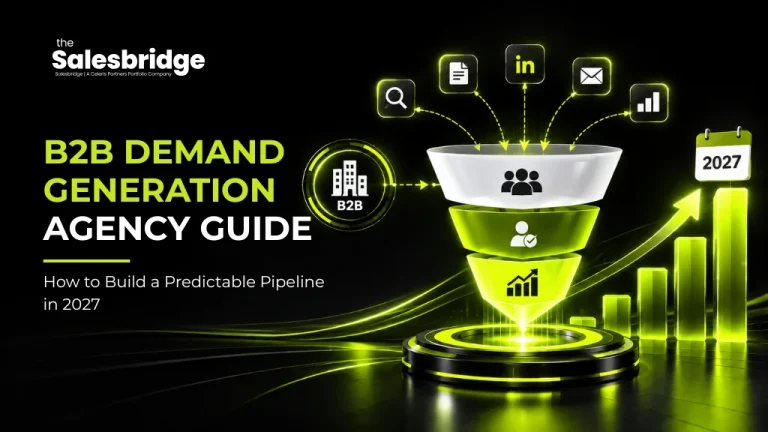

For B2B companies in the USA and UK, generating consistent demand requires more than launching campaigns or collecting contact details. Businesses need a repeatable way to reach the right accounts, build buyer interest, identify qualified opportunities and connect marketing activity with revenue.
Outsourced demand generation gives companies access to external marketing expertise, campaign execution and supporting resources without building every capability internally. Depending on the engagement, an external partner may manage strategy, content, paid campaigns, account-based marketing, content syndication, lead qualification and performance reporting.
However, outsourcing does not automatically create a predictable pipeline. Results depend on the quality of the strategy, the company’s market positioning, data accuracy, sales alignment and the partner’s ability to measure meaningful outcomes.
Understanding what to expect before signing an agreement helps B2B leaders choose the right model, set realistic expectations and build a demand generation programme that supports sustainable growth.
Outsourced demand generation is the practice of working with an external agency or specialist team to plan, execute or manage activities that create and capture demand for a company’s products or services.
Instead of hiring every specialist internally, businesses can access expertise across several marketing functions through one partner or a coordinated group of providers.
For example, a US-based SaaS company entering the UK market may need targeted content, LinkedIn campaigns, account-based marketing and qualified lead generation. An outsourced partner can help coordinate these activities around a defined audience and commercial objective.
The scope can range from managing selected channels to operating a broader demand generation programme. Before engagement begins, both parties should agree on responsibilities, deliverables, target audiences, qualification criteria and reporting expectations.
The objective is not simply to outsource marketing tasks. It is to establish a structured process for generating relevant demand and turning buyer interest into sales opportunities.
Building an internal demand generation team requires people with different skills, suitable technology, reliable data and a process for coordinating marketing with sales. Hiring these capabilities individually can take time and increase operational complexity.
Outsourcing offers an alternative for companies that need specialist support but do not want to recruit every role immediately.
A demand generation programme may require expertise in SEO, paid media, content development, account-based marketing, email marketing, data enrichment and campaign analytics.
An experienced external team can bring these capabilities together under a coordinated plan. This is particularly useful for growing B2B companies whose internal marketing teams are small or already managing multiple priorities.
Companies may need additional support when entering a new market, launching a service, targeting a new industry or increasing campaign activity.
Outsourced demand generation can provide execution capacity without requiring a permanent internal team for every function. The precise flexibility depends on the provider’s contract, available resources and agreed scope.
Companies targeting both markets need to consider more than changing geographic filters in an advertising platform.
Messaging, industry priorities, buyer roles, competitive positioning and sales processes may differ between markets. Campaigns should reflect the needs of each audience rather than treating the USA and UK as identical markets.
An outsourced partner should clarify which activities can be shared across markets and which require local research, tailored messaging or separate campaign execution.
The services included depend on the company’s objectives and the partner’s capabilities. However, a well-planned engagement should connect the following activities where they are relevant.
The starting point is a clear ideal customer profile (ICP). This defines the types of companies most likely to benefit from the solution and become valuable customers.
The process may consider industry, company size, geography, technology environment, business challenges and relevant buying roles. For account-based programmes, the partner can also help identify priority companies and members of their buying committees.
Without a clear ICP, campaigns can attract contacts who match broad demographic criteria but have little commercial relevance.
B2B buyers research potential solutions before contacting sales. Educational articles, service pages, industry guides and case studies can help companies answer those questions and build credibility.
Content and SEO should support actual buyer needs rather than simply target high-volume keywords. The goal is to attract relevant visitors, demonstrate expertise and create useful paths toward the next step.
For example, companies exploring B2B content syndication strategies can use educational content to reach decision-makers through both organic discovery and targeted distribution.
Paid search can capture existing demand from people actively looking for solutions, while LinkedIn advertising and other targeted campaigns can introduce a company to relevant audiences.
Account-based marketing (ABM) adds another layer by coordinating campaigns around selected companies, industries or buying groups.
The outsourced team should explain why each channel is appropriate, how audiences will be selected and how campaign performance will be evaluated. A larger channel mix is not automatically better; every activity should have a defined purpose.
Content syndication extends the reach of useful assets to relevant audiences outside a company’s own website. Lead generation activities can then capture responses from prospects who engage with campaigns.
Quality control is essential. The programme should specify audience criteria, data requirements, consent practices and lead qualification standards before contacts are delivered to sales.
A download or form submission alone does not prove that someone is ready to purchase.
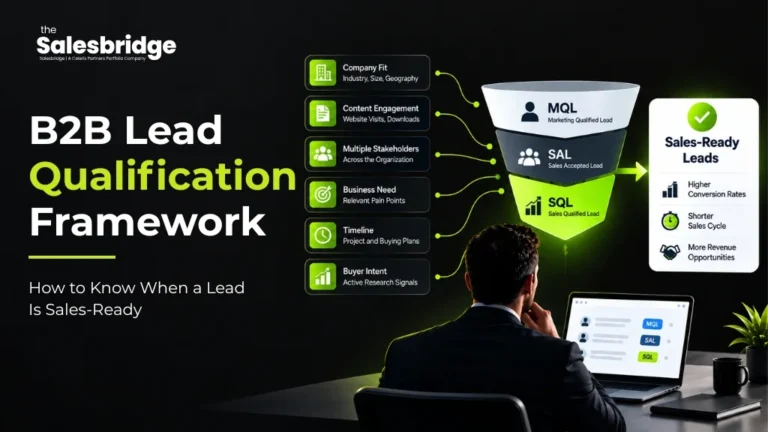
An external partner may help assess prospects based on company fit, business need, engagement, buying intent and timing.
Leads that meet agreed criteria can be routed to sales, while earlier-stage prospects can receive relevant follow-up content.
A documented B2B lead qualification framework helps marketing and sales agree on when a lead should move forward. This reduces confusion and makes lead quality easier to evaluate.
Outsourced demand generation should begin with a structured onboarding process rather than an immediate promise of pipeline results.
The initial phase should establish business objectives, ICP, target markets, buyer roles, existing campaign performance and the current sales process.
The agency should review available CRM data, identify gaps in tracking, clarify lead definitions and agree on the channels to prioritise. Messaging and campaign plans should follow from this assessment.
The next phase may include creating campaign assets, preparing landing pages, configuring tracking, developing target account lists and launching initial campaigns.
Both teams should confirm that lead capture, attribution and routing work correctly. Early engagement data can reveal whether the campaign is reaching the intended audience.
By this stage, the team should be reviewing campaign engagement, audience quality, conversion patterns and early qualification outcomes.
Some programmes may generate qualified meetings or opportunities within this period. Others, particularly those involving complex enterprise sales, may need longer to demonstrate commercial impact.
The important expectation is transparent learning and evidence-based optimisation, not a guaranteed revenue result by day 90.
The right metrics depend on the company’s sales cycle, business model and campaign objectives. Reporting should distinguish between early indicators and actual commercial outcomes.
Relevant website visits, target-account engagement, content interactions and campaign responses help establish whether marketing reaches the intended audience.
These metrics are useful for diagnosis, but they should not be treated as proof of pipeline contribution.
Marketing-qualified leads (MQLs), sales-accepted leads (SALs), sales-qualified leads (SQLs), qualified meetings and opportunity creation provide a clearer view of whether campaign responses are commercially relevant.
Marketing and sales should agree on the definitions before campaign launch. Otherwise, the agency may report success while the sales team rejects most of the leads.
Over time, reporting should connect campaigns with opportunities created, pipeline value, closed revenue and acquisition costs where the available data supports those calculations.
Companies should also clarify the difference between pipeline sourced by marketing and pipeline influenced by marketing. These measures describe different contributions and should not be presented as interchangeable.
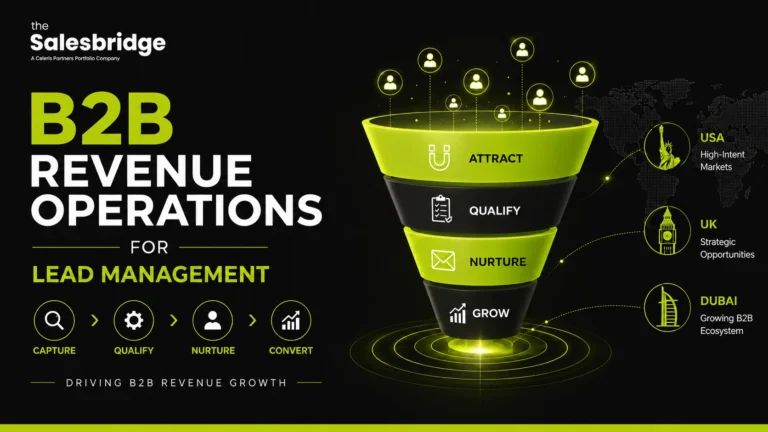
A robust revenue operations and lead management process can help connect campaign data, CRM stages, lead routing and sales outcomes.
There is no single price for outsourced demand generation. Costs depend on the scope of work, target markets, number of channels, data requirements, campaign complexity and level of strategic support.
A focused engagement covering one channel will generally require a different budget from a programme involving content production, paid media, ABM, content syndication, lead qualification and reporting.
When comparing proposals, evaluate the complete scope rather than the monthly fee alone. Confirm whether media spend, technology, data, creative production and additional services are included or billed separately.
Ask for a clear breakdown of deliverables, contract duration, performance measures, ownership of campaign assets and the process for adjusting the scope.
The most useful comparison is the expected value of the programme relative to its total cost and the quality of opportunities it helps generate—not simply the lowest price per lead.
Choosing a provider requires more than reviewing its service list. The partner should understand your business model, target audience, sales process and growth objectives.
Start by assessing its approach to ICP research and campaign strategy. Ask how it would decide which channels to use, what evidence would guide those decisions and how the programme would change if initial results were weak.
Next, examine reporting and qualification. A credible provider should explain how leads are defined, how data moves into your CRM and how sales feedback informs optimisation.
Clarify responsibilities before signing. Determine who owns campaign strategy, content, data, creative assets, reporting, technology configuration and sales coordination. Establish how often performance will be reviewed and how concerns will be escalated.
Finally, look for a partner willing to discuss limitations and risks. No agency can guarantee that every lead will convert or that every campaign will generate a specific amount of revenue. Good planning, transparent measurement and continuous improvement are more reliable foundations for a long-term relationship.
Outsourced demand generation is when a business hires an external agency or specialist team to manage some or all of its demand creation and pipeline development activities. Services may include content, SEO, paid campaigns, ABM, content syndication, lead qualification and performance reporting.
Yes. It can be suitable when a company needs specialist skills or additional execution capacity but does not want to build a complete internal team. Success still depends on having a clear offer, a defined target market, sufficient sales capacity and realistic objectives.
Outsourced lead generation typically focuses on identifying prospects and capturing contact details or meetings. Outsourced demand generation has a broader scope that can include audience education, demand creation, demand capture, nurturing, qualification and measurement of pipeline contribution. The exact distinction depends on the contracted services.
Early engagement and campaign performance can often be assessed during the first few months, but qualified opportunities and revenue may take longer. Timelines depend on the sales cycle, market, offer, campaign maturity and quality of execution. A 90-day review should evaluate learning and progress without assuming every B2B programme follows the same timeline.
Measure relevant audience engagement, lead quality, sales acceptance, qualified meetings, opportunity creation, pipeline contribution and revenue where attribution data is available. Agree on definitions and reporting responsibilities before launch so that the company and its partner evaluate performance using the same standards.
Outsourcing demand generation works best when strategy, targeting, campaign execution and sales follow-up operate as one coordinated programme.
The Salesbridge helps B2B companies explore B2B lead generation, demand generation, account-based marketing, content syndication, email marketing and appointment setting to reach relevant decision-makers and support pipeline growth.
If your business is evaluating outsourced demand generation for the US or UK market, visit The Salesbridge to explore how a demand generation programme can align with your target audience, sales process and growth objectives.