B2B companies entering 2027 face a familiar growth problem: generating attention is relatively easy, but turning that attention into qualified pipeline and revenue is much harder.
Buyers research independently, multiple stakeholders influence purchasing decisions, and sales teams cannot afford to spend time on every lead that enters the CRM. This is why more companies are evaluating a B2B demand generation agency not simply as a campaign execution partner, but as an extension of their revenue team.
A strong demand generation programme connects audience targeting, content, paid media, account-based marketing, lead generation, nurturing, qualification and sales follow-up into one measurable system.
The objective is straightforward: create the right demand, capture buying interest, qualify it properly and move the right accounts toward sales conversations.
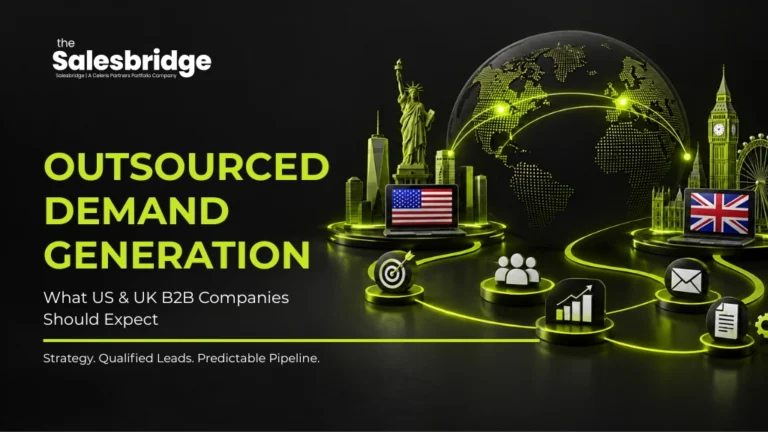
A B2B demand generation agency helps businesses create, capture and convert demand from their target market through coordinated marketing and sales-focused activities.
Unlike a single-channel marketing agency, a demand generation partner looks at the complete path from target audience to pipeline.
This can include market research, ICP development, content strategy, SEO, paid advertising, LinkedIn campaigns, account-based marketing, content syndication, email marketing, lead qualification, nurturing and sales development.
The important distinction is that demand generation should not stop at impressions, clicks or raw lead volume.
The programme should connect marketing activity to measurable outcomes such as qualified leads, sales acceptance, opportunities, pipeline and revenue.
Lead generation focuses primarily on capturing contact information from potential prospects.
Demand generation is broader.
It creates awareness among relevant buyers, develops interest, captures existing demand, identifies buying signals and supports the movement from marketing engagement to sales opportunity.
A lead can be generated without creating meaningful demand. A demand generation programme is designed to build a stronger relationship between market interest and commercial outcomes.
A predictable pipeline rarely comes from one marketing channel.
The strongest programmes combine multiple activities based on the company’s audience, sales cycle, market and revenue objectives.
Before launching campaigns, the agency should understand who the business actually wants to reach.
An effective ideal customer profile considers company size, industry, geography, business model, technology environment, revenue potential and buying roles.
For US and UK B2B companies, targeting may also need to account for regional buying behaviour, market maturity and differences in sales cycles.
A clearly defined ICP prevents marketing budgets from being spent on accounts that were never likely to become customers.
B2B buyers often research problems before speaking with sales.
Useful content can answer those questions while establishing expertise around the problems and solutions the company addresses.
A demand generation strategy can combine educational blog content, comparison pages, case studies, research-led assets, guides and conversion-focused landing pages.
For example, The Salesbridge’s existing B2B content syndication guide can support a broader strategy for reaching qualified decision-makers beyond organic search alone.
Paid search can capture existing demand when buyers are actively looking for solutions.
LinkedIn and other B2B advertising channels can support account targeting, category education and demand creation.
The important consideration is not simply how many clicks a campaign produces. It is whether the campaign reaches the right companies and creates meaningful engagement that can eventually contribute to qualified pipeline.
ABM becomes particularly valuable when a business has a defined list of high-value accounts.
Instead of marketing to a broad audience, campaigns can be built around specific companies, buying groups, industries or account segments.
Content, advertising, email and sales outreach can then work together around the same target accounts.
Content syndication can extend the reach of valuable B2B assets to relevant audiences outside the company’s existing website traffic.
The quality of the programme depends heavily on audience targeting, consent, data accuracy and qualification standards.
The objective should not be to generate the largest possible number of downloads. It should be to identify people and accounts that fit the target market and show meaningful interest.
Not every response is ready for sales.
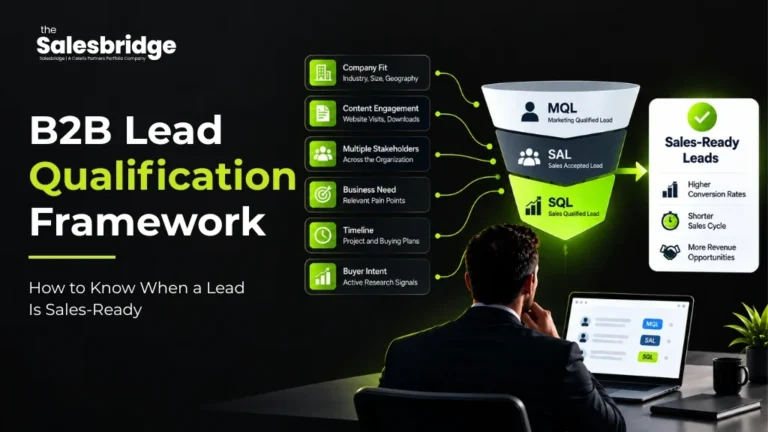
A demand generation agency should help establish qualification criteria that consider company fit, business need, engagement, buying intent, decision-making role and timing.
Leads that are not ready for sales can continue through relevant nurturing rather than being immediately passed to an SDR or account executive.
Demand generation becomes significantly more effective when marketing and sales agree on what a qualified opportunity actually means.
Work backwards from the revenue objective.
If the business needs a specific amount of new revenue, estimate the required pipeline based on average deal value, win rate and sales cycle.
That gives the marketing team a commercial target rather than an isolated lead-generation target.
Marketing and sales should agree on definitions for stages such as lead, MQL, sales-accepted lead, SQL and opportunity.
Without these definitions, marketing may report campaign success while sales considers the leads unusable.
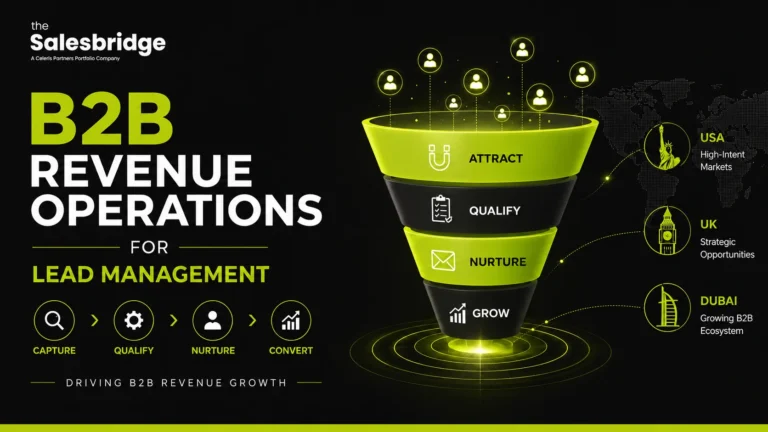
A structured B2B revenue operations and lead management process can help connect lead routing, qualification, CRM management and sales follow-up.
When a lead moves from marketing to sales, the sales team should understand why the account has been prioritised.
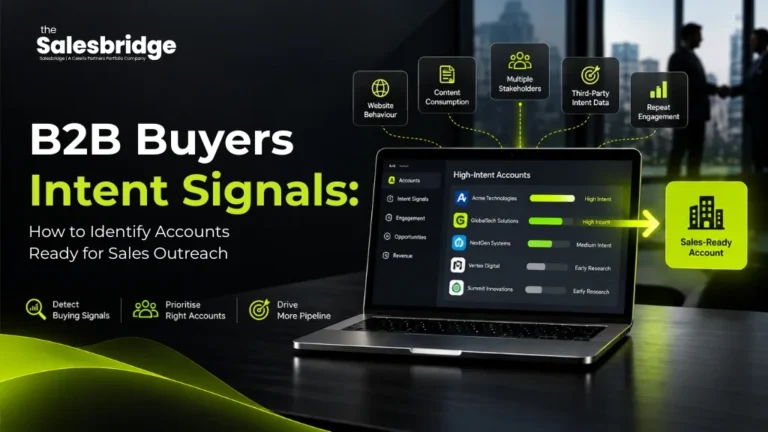
Relevant information can include company fit, engagement history, content consumed, campaign source, business need, buyer role and available intent signals.
This creates a more useful sales conversation than simply forwarding a contact record.
A B2B demand generation agency should be evaluated on business outcomes rather than activity reports alone.
Early-stage metrics can include relevant website traffic, content engagement, target-account reach and campaign engagement.
These indicators help determine whether the programme is reaching the right audience.
They should not, however, be treated as proof of revenue performance.
The next level is measuring MQLs, sales acceptance, qualified leads, meetings, opportunities and pipeline created.
This is where marketing performance becomes more closely connected to sales outcomes.
The strongest measurement model connects campaigns with opportunity value, closed revenue, customer acquisition cost and return on investment.
A campaign generating fewer leads may be more valuable if those leads consistently become qualified opportunities.
The question should always be:
Which activities are helping create pipeline from the accounts we actually want to win?
Many demand generation programmes fail because the problem is not a lack of marketing activity. The problem is a lack of alignment.
Generating hundreds of low-fit contacts can create more work for sales without improving revenue.
Fix: Define qualification criteria before campaigns launch and measure sales acceptance and opportunity creation.
SEO, paid advertising, content, email and outbound campaigns can each operate successfully while producing a disconnected buyer experience.
Fix: Build campaigns around the same ICP, buyer problems, messaging and commercial objectives.
Poor company data, outdated contacts and inaccurate targeting can reduce campaign performance before the creative or messaging is even evaluated.
Fix: Establish a data validation and enrichment process before activating campaigns.
B2B buying cycles can extend beyond the reporting period of a campaign.
Fix: Track leading indicators while maintaining pipeline and revenue measurements over an appropriate time horizon.
Sales teams lose confidence when marketing repeatedly sends contacts that do not meet agreed criteria.
Fix: Establish documented sales acceptance standards and create a feedback loop between both teams.
Choosing the right agency requires more than comparing service lists.
The right partner should fit your business model, market, sales process, internal resources and growth stage.
Ask how the agency connects demand creation, demand capture, qualification and sales follow-up.
A provider that only manages one channel may be useful for a specific requirement, but a demand generation partner should understand how different activities contribute to the overall pipeline.
Ask which metrics the agency reports and how those metrics connect to revenue.
Be cautious if reporting stops at impressions, clicks, downloads or raw leads.
A serious conversation should include qualified leads, sales acceptance, opportunities, pipeline and eventually revenue.
Clarify who is responsible for strategy, content, campaign execution, data, CRM integration, reporting, optimisation and sales coordination.
Also establish who owns campaign assets, data and accounts created during the engagement.
Ask the agency to define a qualified lead before signing a contract.
The definition should be specific enough for your sales team to agree that the lead is commercially relevant.
Experience in your industry is useful, but experience with your type of B2B sales motion can be even more important.
Consider whether the agency understands complex buying committees, longer sales cycles, high-value products, geographic targeting and your specific decision-maker profiles.
A modern programme should be integrated rather than built around disconnected campaigns.
The first stage is understanding the market, ICP and revenue objective.
The second is building content, messaging and campaign assets around the questions and problems your buyers care about.
The third is reaching those buyers through appropriate channels, including organic search, paid media, LinkedIn, content syndication, email and account-based campaigns.
The fourth is identifying engagement and intent signals.
The fifth is qualifying and routing the right accounts to sales.
The final stage is measuring what happens after the lead enters the sales process and using that information to improve targeting and campaigns.
This creates a continuous cycle:
Target → Reach → Engage → Qualify → Convert → Measure → Optimise
That operating model is more sustainable than repeatedly launching disconnected lead-generation campaigns.
A B2B demand generation agency creates and captures demand through coordinated marketing activities such as content, SEO, paid media, ABM, content syndication, email marketing, lead qualification and nurturing. The goal is to help generate qualified pipeline rather than simply increase lead volume.
A lead generation agency generally focuses on identifying and capturing prospects. A demand generation agency takes a broader approach that includes creating market awareness, developing buyer interest, capturing existing demand, nurturing prospects and connecting marketing activity with qualified pipeline.
Costs vary significantly depending on the scope, channels, target market, data requirements, media spend and level of strategic support. Instead of comparing agencies only by monthly price, evaluate the qualification standard, deliverables, reporting model and expected contribution to qualified pipeline.
Measure performance across the funnel, including target-account engagement, qualified leads, sales acceptance, meetings, opportunities, pipeline created, customer acquisition cost and revenue. The right metrics depend on your sales cycle and business model, but reporting should ultimately connect marketing activity with commercial outcomes.
An agency can make sense when a company has a clear ICP and offer but lacks the internal expertise, capacity or systems required to consistently create and manage demand. Companies should also have sufficient sales capacity to follow up with qualified opportunities generated by the programme.
A predictable pipeline does not come from generating more contacts. It comes from consistently reaching the right companies, creating relevant demand, identifying buying activity, qualifying prospects and connecting marketing with sales execution.
The Salesbridge helps B2B companies in the USA and UK build demand generation programmes across B2B lead generation, account-based marketing, content syndication, appointment setting, email marketing and sales-focused campaign execution.
If your company is looking for a B2B demand generation agency that can connect marketing activity with qualified pipeline and sales opportunities, explore The Salesbridge and discuss your growth objectives with our team.