Generating leads is only the first step in building a successful B2B sales pipeline. What happens after an enquiry arrives determines whether that prospect becomes a sales opportunity or disappears without meaningful follow-up.
For companies targeting customers in the USA and UK, managing enquiries across website forms, paid campaigns, LinkedIn, email marketing, content syndication and other channels can become complicated. Leads may remain unassigned, reach the wrong sales representative or receive follow-up that does not match their buying interest.
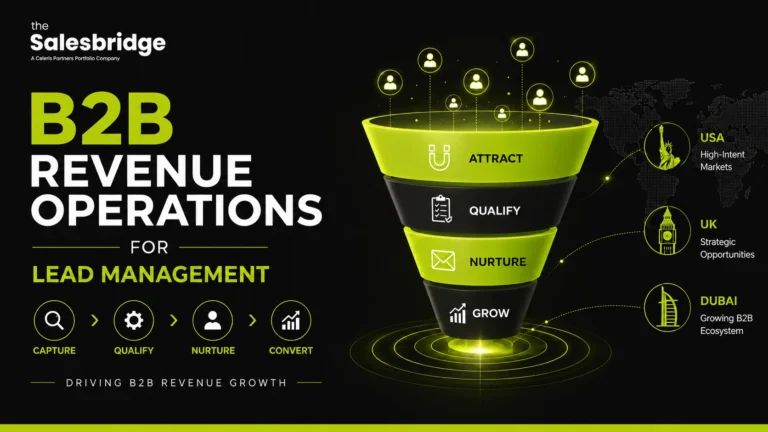
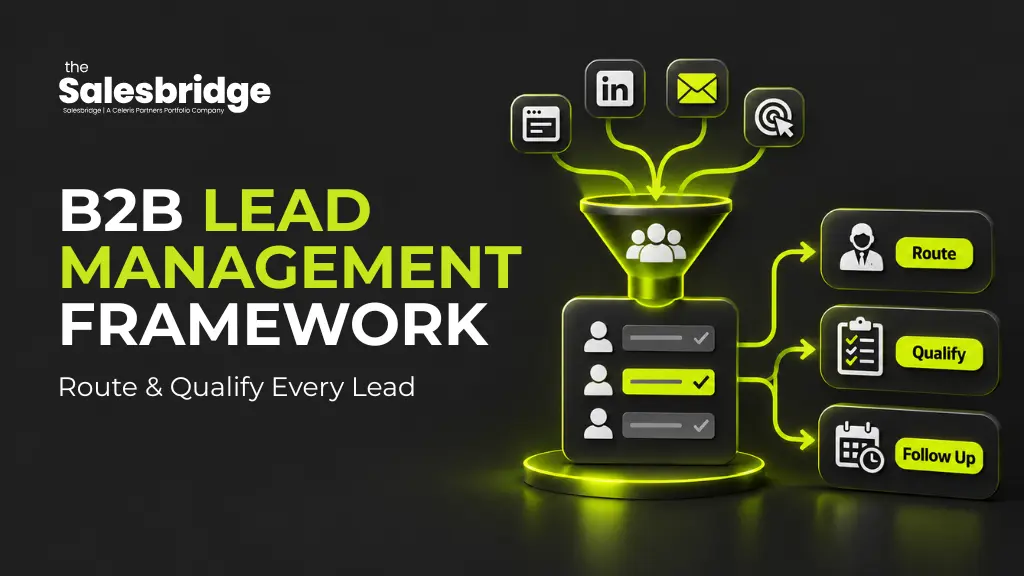
A structured B2B lead management framework addresses these problems by connecting lead capture, data enrichment, qualification, routing, nurturing and sales follow-up. It gives marketing and sales teams a consistent process for handling every enquiry and identifying which prospects deserve immediate attention.
The objective is not simply to manage more contacts. It is to improve lead quality, reduce missed opportunities and create a reliable process for turning buyer interest into qualified pipeline.
B2B lead management is the process of capturing, organising, qualifying, assigning, nurturing and tracking potential business customers throughout their journey toward becoming sales opportunities.
It connects marketing activities with sales execution so that prospects receive relevant communication and timely attention based on their needs, company profile and engagement.
For example, a US-based software company may generate enquiries from organic search, LinkedIn campaigns and webinars. Each prospect enters the business through a different channel, but all should follow a consistent process for data validation, qualification and sales assignment.
An effective lead management process establishes four essential details for every lead: who the prospect is, whether the company is a suitable fit, who owns the next action and what should happen next.
Unlike simply storing contacts in a CRM, lead management defines the operating rules that move those records through the sales funnel.
Without clear processes, marketing and sales teams can handle similar enquiries in completely different ways. One representative may contact a prospect immediately, while another may leave an assigned record untouched.
A documented framework creates consistency across teams and channels.
It also helps companies identify poor-quality acquisition sources, improve marketing-to-sales alignment and understand where prospects stop progressing.
For growing businesses in the USA and UK, consistent lead handling becomes especially important when multiple sales representatives, territories, industries or service lines are involved.
The first stage is creating a reliable system for collecting enquiries from relevant marketing and sales channels.
These may include website contact forms, landing pages, Google Ads, LinkedIn campaigns, webinars, email campaigns, referrals and content syndication programmes.
Every captured lead should enter a central CRM or lead management system with its original source recorded. This allows teams to understand where enquiries originate and compare the quality of different acquisition channels.
Form fields should collect enough information to support initial qualification without making submission unnecessarily difficult. Depending on the offer, useful details may include business email, company name, job title, industry and area of interest.
A contact record is only useful when its information is accurate enough for the next action.
Data validation helps identify incomplete records, invalid email addresses, duplicate contacts and irrelevant submissions. Data enrichment can add useful business context, such as company size, industry, location, website and professional role.
For B2B teams targeting multiple markets, geographic information is important for assigning the correct territory and understanding regional requirements.
Clean data also improves segmentation and reporting. Without it, even well-designed lead scoring and routing rules can produce poor results.
Not every enquiry deserves immediate sales attention. Qualification helps determine whether a prospect matches the company’s ideal customer profile and has a relevant business requirement.
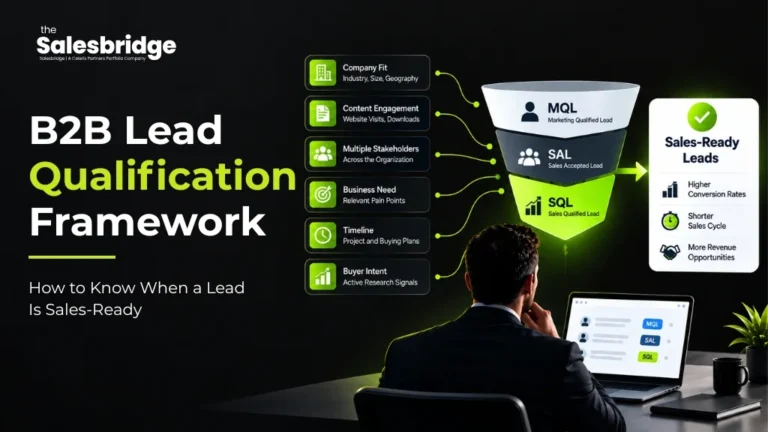
A practical B2B lead management framework should evaluate company fit alongside engagement and buying intent.
Company fit may include industry, employee count, revenue range, geography and technology requirements. Engagement can include website visits, content downloads, webinar participation and responses to campaigns. Buying readiness considers the prospect’s business challenge, decision-making role and potential purchasing timeline.
A structured B2B lead qualification framework can help marketing and sales establish consistent criteria for identifying sales-ready prospects.
Once a lead meets the agreed qualification requirements, it should reach the person or team best equipped to handle it.
Lead routing assigns prospects according to defined business rules. Common approaches include territory-based routing, industry-based assignment, account ownership, product interest and round-robin distribution.
For example, a company serving the USA and UK may assign enquiries according to geographic coverage, while enterprise accounts may be directed to representatives responsible for strategic customers.
Routing rules should also include fallback ownership for unmatched records, duplicate handling and escalation when a lead remains unassigned.
Automation can make this process more consistent, but the rules must be maintained as territories and sales responsibilities change.
A qualified lead should never depend on someone remembering to check the CRM.
Define a follow-up process that specifies the first response target, communication channel, responsible representative and next action. High-intent enquiries, such as consultation requests, may require a faster response than someone downloading an introductory guide.
Follow-up should also reflect the prospect’s original interest. A person requesting a product demonstration should receive a different response from someone exploring general industry information.
If the prospect does not respond, a planned sequence of relevant emails, calls and other appropriate interactions can maintain communication without overwhelming them.
Some prospects may fit the ideal customer profile but have no immediate purchasing requirement. Sending every such contact directly to sales can waste resources and create unnecessary pressure.
Lead nurturing keeps the relationship active through relevant educational content, industry insights, case studies, product information and targeted email communication.
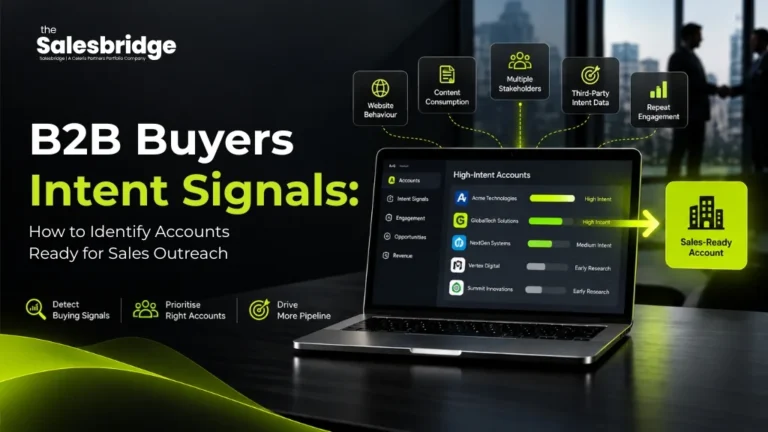
Buyer activity can help determine when a prospect deserves another review. For example, repeated engagement with pricing information or service pages may indicate a stronger interest than an isolated content download.
Your guide to B2B buyer intent signals explains how companies can use engagement and buying signals to prioritise sales outreach.
A reliable lead routing model begins with agreed qualification criteria. Marketing and sales should define what makes a lead eligible for immediate follow-up and which conditions require additional review.
For example, an enterprise software enquiry from a target industry may be prioritised for a specialised sales representative. A smaller company that does not meet the target profile may enter a different qualification or nurture process.
The routing system should account for existing account ownership, territory, company size, service interest and sales representative availability.
It is equally important to define what happens when the system cannot identify an appropriate owner. An exception queue with a responsible manager prevents unmatched leads from disappearing into the CRM.
Review routing exceptions and reassignment patterns regularly. These records can reveal outdated territories, missing data fields or rules that no longer reflect the sales organisation.
A successful B2B lead management programme needs reporting that measures both process efficiency and commercial performance.
Lead response time measures how long prospects wait before receiving meaningful sales attention. Track assignment time separately from the first human response, since a lead can be routed quickly but still remain untouched.
Lead acceptance rate shows how many marketing-qualified leads sales accepts for further engagement. Review rejection reasons to identify problems with targeting, data quality or qualification criteria.
MQL-to-SQL conversion rate measures how effectively marketing-qualified leads progress into sales-qualified leads. It helps reveal whether the business is attracting relevant prospects and preparing them for sales conversations.
Lead-to-opportunity conversion connects lead management activity with actual pipeline development. It shows how many managed leads become qualified sales opportunities.
Companies should also monitor unassigned leads, duplicate records, follow-up compliance, nurture engagement, opportunity value and closed-won revenue.
These measures become more valuable when connected with a broader revenue operations and lead management process, where marketing and sales performance can be evaluated together.
One frequent mistake is prioritising lead volume over lead quality. Generating hundreds of contacts has limited value if most do not match the target customer profile.
Another problem is treating every lead equally. A prospect requesting a consultation should not follow the same response path as someone downloading a general educational resource.
Poor CRM hygiene creates further difficulties. Duplicate records, outdated contact details and missing source information make it harder to route prospects and measure campaign performance.
Finally, many organisations automate processes without defining the underlying rules. Automation can improve execution, but it cannot compensate for unclear qualification criteria, incorrect ownership or a weak follow-up strategy.
Start by reviewing how enquiries currently move from initial capture to sales follow-up. Identify where records become unassigned, where qualification differs between teams and where prospects stop receiving communication.
Next, document the lead lifecycle, required CRM fields, routing rules and qualification standards. Make sure marketing and sales agree on the meaning of each stage and the responsibilities attached to it.
Introduce automation where it removes repetitive work, such as lead assignment, notifications, task creation and follow-up reminders. Keep manual review available for unusual records, strategic accounts and exceptions.
Finally, review performance with marketing, sales and operations on a regular schedule. Use conversion data, rejection reasons and follow-up records to improve targeting and process quality.
A B2B lead management framework should evolve as the company introduces new services, enters additional markets and changes its sales structure.
B2B lead management is the process of capturing, organising, qualifying, routing, nurturing and tracking potential business customers. It helps marketing and sales teams manage enquiries consistently and move relevant prospects toward sales opportunities.
A simplified process includes lead capture, data validation, qualification, assignment and follow-up. Many mature programmes also include lead nurturing, opportunity tracking and performance analysis as ongoing stages.
Qualify leads using company fit, business need, engagement and buying readiness. Once a prospect meets the agreed criteria, assign it according to territory, industry, account ownership, product interest or another documented routing rule.
CRM is the technology used to store customer and prospect information and manage interactions. Lead management is the broader process that defines how leads are captured, qualified, assigned, followed up and converted using that information.
Companies can improve follow-up by defining response targets, assigning clear ownership, using CRM reminders, personalising communication based on buyer interest and tracking every meaningful interaction. Regular reviews help identify missed leads and improve response consistency.
A consistent lead management process helps businesses get more value from their marketing investment by ensuring that relevant enquiries receive the right attention at the right time.
The Salesbridge supports B2B companies through B2B lead generation, demand generation, account-based marketing, content syndication, email marketing and appointment setting to reach relevant decision-makers and develop qualified sales opportunities.
If your business is generating enquiries but struggling with qualification, routing or follow-up, it may be time to strengthen the process behind your pipeline.
Connect with The Salesbridge to explore a lead generation and demand generation approach aligned with your target audience, sales process and growth objectives.