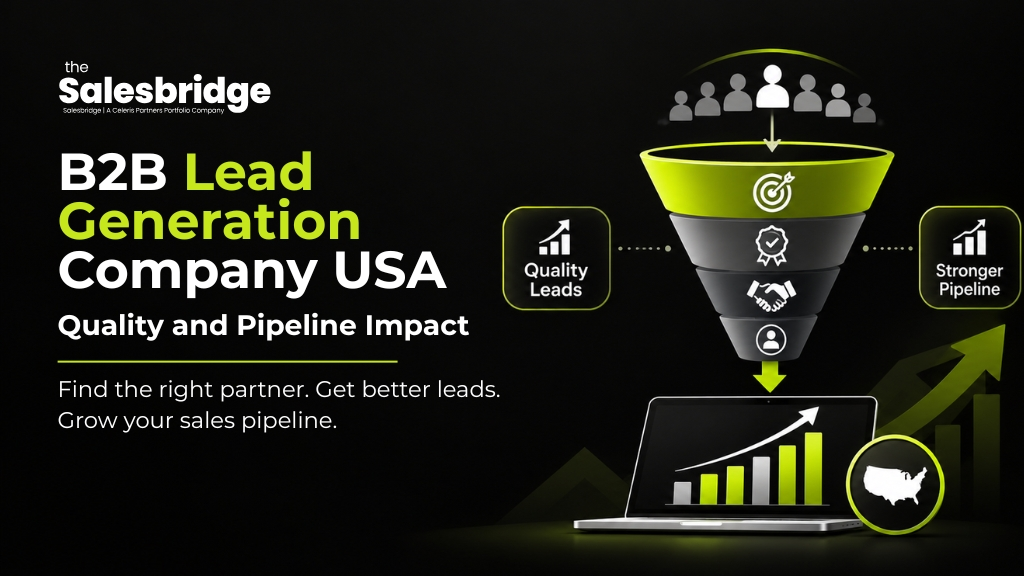
Choosing a B2B lead generation company in the USA can influence how effectively your business reaches decision-makers, develops sales conversations and builds a predictable pipeline. However, not every provider follows the same approach. Some focus on delivering contact lists, while others manage targeting, campaign execution, lead qualification and appointment setting.
For companies operating in competitive US and UK markets, the difference matters. A large number of contacts does not necessarily mean more sales opportunities. What matters is whether those contacts match your ideal customer profile, demonstrate relevant business interest and have a genuine reason to consider your solution.
Before selecting a lead generation partner, businesses should understand its targeting methodology, data quality standards, campaign process, qualification criteria and reporting capabilities. Evaluating these areas helps determine whether a provider can support meaningful pipeline growth rather than simply increase enquiry volume.
A B2B lead generation company helps businesses identify potential customers, reach relevant decision-makers and generate opportunities for sales teams.
Its responsibilities may include market research, audience segmentation, prospect data building, email marketing, LinkedIn outreach, content syndication, campaign management and appointment setting.
The exact scope depends on the engagement. A data provider may supply contact information, whereas a full-service B2B lead generation agency may manage the process from audience research through qualified lead delivery.
For example, a SaaS company targeting US technology businesses may need to reach IT directors, operations leaders and vice presidents. A suitable partner should understand the company’s industry, target account criteria, buying roles and service positioning before launching campaigns.
The objective is to connect businesses with relevant prospects who have the potential to become customers.
The first evaluation should focus on targeting.
A reliable provider should understand which companies are suitable prospects and which professionals influence purchasing decisions. This requires more than selecting contacts based on job titles.
An Ideal Customer Profile (ICP) should consider industry, company size, location, business model, revenue range and relevant technology or operational requirements. Buyer personas should then identify the roles involved in researching, evaluating and approving a purchase.
For US campaigns, targeting may also need to account for state-level coverage, regional markets and industry concentration. Businesses targeting the UK should consider its market structure separately rather than simply reusing US audience segments.
Ask the provider to explain how it builds target account lists, excludes unsuitable companies and validates decision-maker relevance. Request a sample audience before approving the campaign.
Poor contact data can undermine an otherwise strong campaign.
Outdated email addresses, incorrect job titles, duplicate records and incomplete company information waste campaign resources and create unnecessary work for sales representatives.
A capable B2B lead generation company in the USA should explain where its data comes from, how records are verified and how frequently information is reviewed.
Evaluate business email validity, company information, role accuracy, geographic relevance and duplicate management. Also ask how the provider handles invalid records or contacts that no longer match the agreed criteria.
For businesses targeting multiple markets, data quality should be assessed separately across the USA and UK. A provider should be able to explain how it validates contacts in each geography.
Lead generation should begin with a campaign strategy, not an immediate outreach schedule.
The provider should understand your service offering, target audience, competitive positioning and the problem your solution addresses. These inputs determine the messaging, channels and conversion points used throughout the campaign.
Depending on the audience, the programme may combine email marketing, LinkedIn outreach, content syndication, paid campaigns and targeted appointment setting.
Ask how campaign messaging is developed, how audiences are segmented and how performance is reviewed. A provider should also explain how it tests messaging and improves targeting when early results indicate poor engagement.
A clear execution process makes it easier to understand what work is being performed and why.
Not every contact generated by a campaign is a qualified sales opportunity.
Before signing an agreement, establish what the provider means by a qualified lead. This definition should be documented and agreed upon by both organisations.
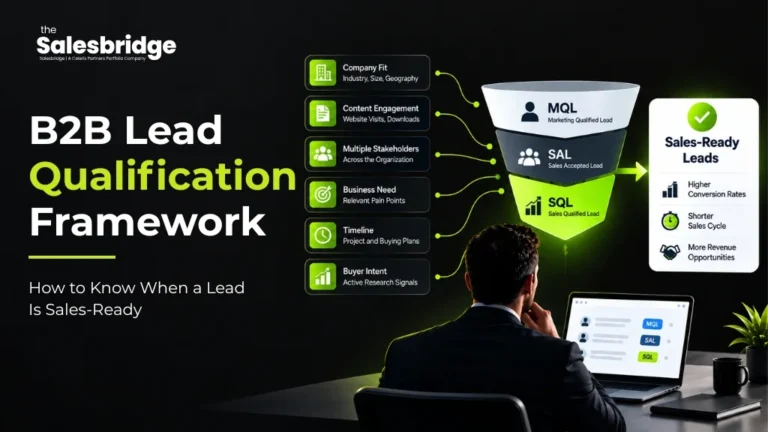
Qualification may consider company fit, professional role, business requirement, purchasing authority, engagement and potential buying timeline.
For example, a marketing director at a target software company may match the intended audience, but that alone does not establish a current purchasing requirement.
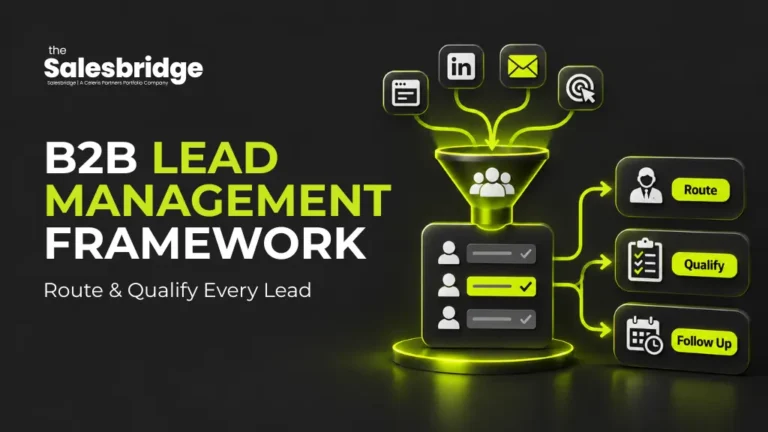
A structured B2B lead qualification framework helps businesses distinguish between marketing engagement and genuine sales readiness.
Ask whether the provider follows agreed qualification criteria and how it handles rejected or disputed leads.
The right service mix depends on your market, sales cycle and internal resources. Businesses should evaluate capabilities based on their actual growth requirements rather than choosing a provider simply because it offers the largest service list.
Prospect research identifies relevant companies and decision-makers within a defined target market. It provides the audience foundation for subsequent marketing and sales activities.
Targeted email campaigns help businesses introduce relevant solutions, share useful information and develop conversations with prospective customers. Campaign quality depends on audience relevance, message personalisation, responsible data practices and deliverability.
LinkedIn can support professional audience engagement, while account-based marketing focuses on selected companies and the stakeholders involved in their purchasing decisions.
These approaches are particularly useful when multiple people influence a business purchase.
Content syndication distributes relevant assets through external publishing networks to reach audiences beyond a company’s existing website traffic.
It can support awareness and prospect acquisition, provided that targeting, consent, data quality and qualification requirements are clearly defined.
Appointment setting focuses on arranging relevant sales conversations between prospective customers and the internal sales team.
Businesses should establish whether meetings are simply booked or also checked against agreed qualification and attendance criteria.
The performance of a lead generation partner should be evaluated through the complete sales journey rather than the number of contacts delivered.
Lead-to-opportunity conversion rate shows how many generated leads progress into qualified sales opportunities. It helps determine whether targeting and qualification are attracting commercially relevant prospects.
Sales acceptance rate measures how many leads are accepted by the sales team for further engagement. Reviewing rejection reasons can expose targeting or qualification weaknesses.
Cost per qualified lead measures campaign investment against the number of leads that meet the agreed qualification requirements. It provides a more useful comparison than cost per raw contact.
Cost per opportunity connects acquisition spending with actual pipeline creation. This helps businesses understand whether campaigns are generating opportunities worth pursuing.
Pipeline contribution examines the value of opportunities associated with campaign activity. It should be interpreted carefully, with clear definitions for sourced and influenced pipeline.
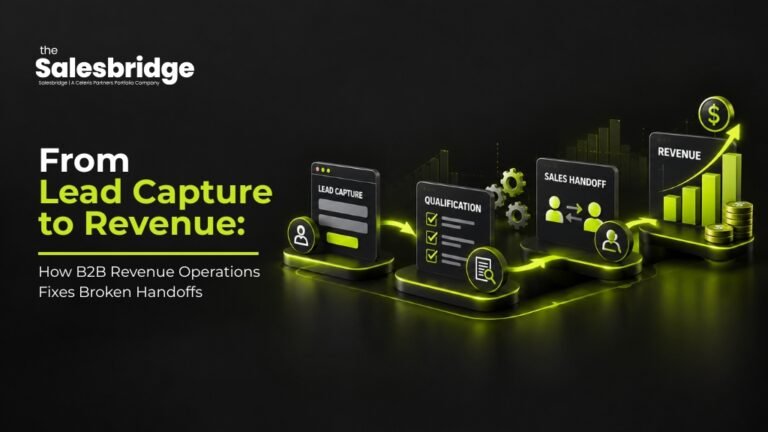
For a broader performance view, connect lead generation reporting with your B2B revenue operations and lead management process.
Be cautious when a provider promises a fixed number of sales-ready leads without first understanding your audience, offering and qualification requirements.
Other warning signs include refusing to share sample targeting, unclear data sourcing, vague campaign reporting and no documented process for handling invalid or unsuitable leads.
A provider that reports only email opens, contact volume or booked meetings may not be giving you enough information to evaluate commercial performance.
Also examine how the company approaches data protection and outreach requirements. Campaigns involving US and UK audiences may fall under different legal and regulatory obligations. Ask who is responsible for compliance, suppression lists, consent requirements and data handling.
Transparency is essential because poor execution can affect both campaign performance and your company’s reputation.
Before making a decision, ask the provider how it defines a qualified lead, how it researches target accounts and how it verifies contact information.
Request examples of campaign reporting, sample prospect records and an explanation of its lead handoff process. Understand which channels it will manage, what responsibilities remain with your internal team and how campaign improvements are decided.
Discuss the commercial model, deliverables, reporting frequency, data ownership and contract terms before starting.
Where possible, agree on a controlled pilot with clear success criteria. A pilot allows both teams to evaluate targeting, communication quality, lead acceptance and operational coordination before expanding the engagement.
A B2B lead generation company identifies potential business customers and helps reach relevant decision-makers through research, data building, email marketing, LinkedIn outreach, content syndication and appointment setting. Some providers also manage qualification and campaign reporting.
Evaluate its understanding of your ideal customer profile, contact data quality, campaign strategy, qualification standards, reporting transparency and experience with similar markets. Request sample work and agree on measurable expectations before signing a long-term engagement.
Costs vary according to campaign scope, target audience, channels, data requirements, service level and qualification responsibilities. Some providers charge monthly retainers, while others use project-based or performance-related pricing. Request a detailed breakdown of deliverables and additional costs before comparing proposals.
A qualified B2B lead generally matches the target company profile, has a relevant professional role and demonstrates a business requirement or meaningful interest in the solution. Qualification criteria should be agreed upon by marketing and sales before campaign execution.
Timelines depend on audience size, data readiness, campaign channels, sales cycle and offer relevance. Initial engagement may appear before qualified opportunities develop. Businesses should assess early campaign indicators alongside lead acceptance, opportunity creation and longer-term pipeline performance.
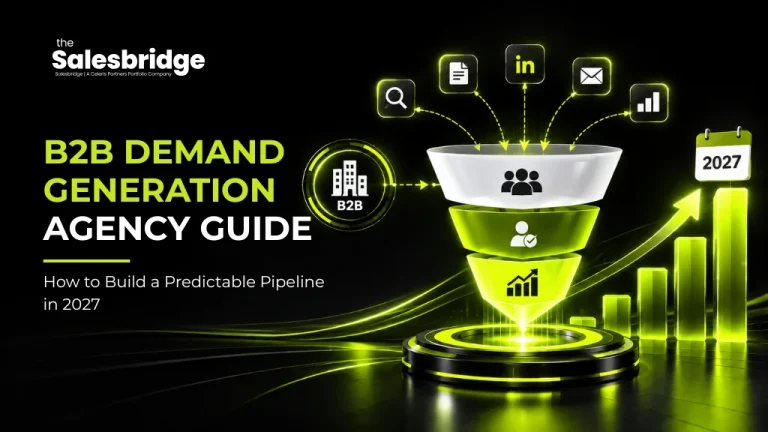
Choosing a lead generation partner should be based on the quality of its process and its ability to reach the right business audience. Effective targeting, reliable data, relevant communication and consistent qualification create a stronger foundation for sales opportunities.
The Salesbridge supports B2B companies through B2B lead generation, demand generation, account-based marketing, content syndication, email marketing and appointment setting.
Whether your business wants to reach decision-makers in the USA, expand into the UK or improve the quality of its existing acquisition campaigns, The Salesbridge can help align campaign execution with your target audience and sales objectives.
Connect with The Salesbridge to discuss a B2B lead generation strategy built around qualified prospects and measurable pipeline growth.