Google Search is changing how people discover information. Instead of relying only on traditional search listings, users increasingly encounter AI-generated summaries that combine information from multiple web pages and provide links to supporting sources. For B2B companies, this creates another opportunity to reach potential buyers while they research business challenges, compare solutions and evaluate service providers.
Understanding how to appear in AI Overviews has therefore become an important consideration for modern content strategies. However, appearing in these results is not achieved by adding a special tag or repeating keywords. It requires content that is accessible to search engines, answers specific questions, demonstrates subject knowledge and offers information worth referencing.
For B2B brands targeting the USA and UK, the opportunity is to build content that supports both traditional organic visibility and AI-powered discovery. This guide explains how to develop a practical framework for improving your chances of being included in Google AI Overviews.
Google AI Overviews are AI-generated summaries that appear in eligible search results to help users understand a topic or question. They can combine information from multiple sources and display links that allow users to explore supporting information.
For example, someone searching for a B2B demand generation strategy may see an overview covering audience targeting, content, campaign channels and measurement, alongside links to relevant websites.
Google determines when an AI Overview is useful for a particular query. It may also explore related searches to gather information about different aspects of a question. This means a page can be relevant because it answers a specific part of a broader topic, not necessarily because it repeats the exact search phrase.
For businesses, the opportunity is to publish useful pages that answer identifiable questions and provide reliable supporting information.
The first step is understanding what the searcher wants to accomplish.
A keyword such as “B2B lead generation” may represent several intentions. A user might want a definition, a strategy, a service provider or a comparison of different approaches.
Your content should address the actual requirement behind the query.
For example, a page targeting “how to improve B2B lead qualification” should explain the qualification process, relevant criteria, common mistakes and practical implementation steps. A generic introduction to lead generation will not satisfy that specific need.
Build your content plan around informational questions, commercial comparisons and solution-related searches. This helps your website cover the complete research journey instead of publishing disconnected articles around similar keywords.
One of the strongest ways to improve AI search visibility is to publish information that offers something beyond a general summary of existing articles.
A page that repeats commonly available definitions provides limited additional value. Instead, include original frameworks, practical examples, industry observations, implementation steps and clearly explained recommendations.
For a B2B marketing company, this could mean publishing a detailed explanation of how marketing-qualified leads become sales-qualified opportunities, or showing how different buyer-intent signals should influence campaign prioritisation.
Where possible, support recommendations with actual experience, documented processes, original research or verified examples. Avoid inventing statistics or presenting assumptions as established facts.
The objective is to give readers a reason to trust and reference your content.
Well-organised content helps readers understand a page and makes important information easier to identify.
Use descriptive H2 and H3 headings that reflect real search questions. Begin each section with a direct explanation before expanding into examples, supporting details and practical considerations.
For instance:
Question: What is B2B lead qualification?
Answer the question immediately, then explain the criteria, process and business impact.
This approach is more useful than hiding the answer after several paragraphs of general background.
Use short paragraphs, meaningful subheadings, comparison tables and numbered processes where they genuinely improve understanding. Keep related information together and avoid creating unnecessary sections simply to include more keywords.
A single article rarely establishes comprehensive expertise across a competitive B2B topic.
Topical authority develops when a website consistently publishes useful content covering connected aspects of a subject.
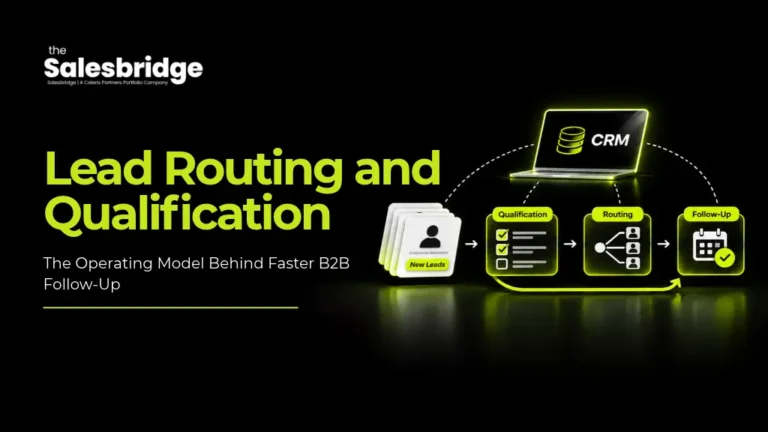
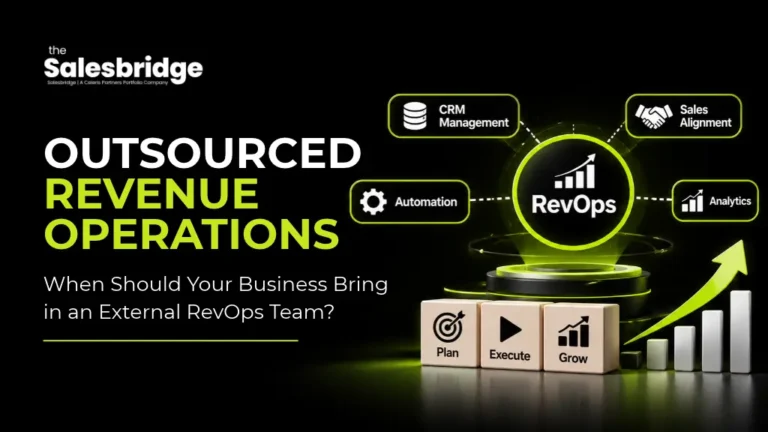
For example, a company focusing on B2B demand generation could develop supporting articles about buyer intent, lead qualification, appointment setting, lead management, revenue operations and pipeline measurement.
Each article should address a distinct search intent while linking naturally to related resources.
This structure helps readers explore a subject in greater depth and makes important pages easier to discover through internal links.
The Salesbridge can strengthen its AI search visibility by connecting its existing demand generation and revenue operations articles into clearly organised topic clusters.
Even useful content cannot appear as a supporting source if search engines cannot access and process the page.
Check that important URLs are crawlable, indexable and eligible to appear in Google Search. Review robots.txt, canonical tags, XML sitemaps, internal links and indexing status.
Ensure that the primary content is available as readable text rather than existing only inside images or inaccessible interactive elements.
Structured data should accurately describe the visible content on the page. Relevant Article or Organization markup may help search engines understand the website, but no special AI Overview schema guarantees inclusion.
Use Google Search Console to identify indexing problems and monitor organic search performance.
B2B buyers often research providers before initiating a conversation. Consistent company information and credible expertise can help them understand who is publishing the content and what the business offers.
Maintain accurate brand details across your website, service pages, author information and company profiles.
Clearly explain your services, target industries, expertise and the problems your company addresses. Use appropriate author or reviewer information where relevant, and support important claims with credible sources.
Your website should also communicate a consistent relationship between its articles and commercial offerings. An article about lead qualification, for example, should connect naturally with the relevant lead generation or revenue operations service.
This creates a clearer experience for both potential customers and search systems.
A successful content strategy should measure more than traditional keyword rankings.
Track organic impressions, clicks, indexed pages, relevant enquiries and conversions. Also review whether your brand or pages appear in AI-powered search experiences for important buyer questions.
Google Search Console’s newer reporting capabilities provide visibility into performance across generative search experiences where available. Review the reports regularly and identify which pages are receiving exposure.
You can also manually test a consistent set of relevant queries, record the sources cited and compare how visibility changes over time. Manual checks are directional rather than a complete measurement system because AI results can vary by query, location and context.
The objective is to understand whether your content is becoming more discoverable and whether that visibility contributes to meaningful business outcomes.
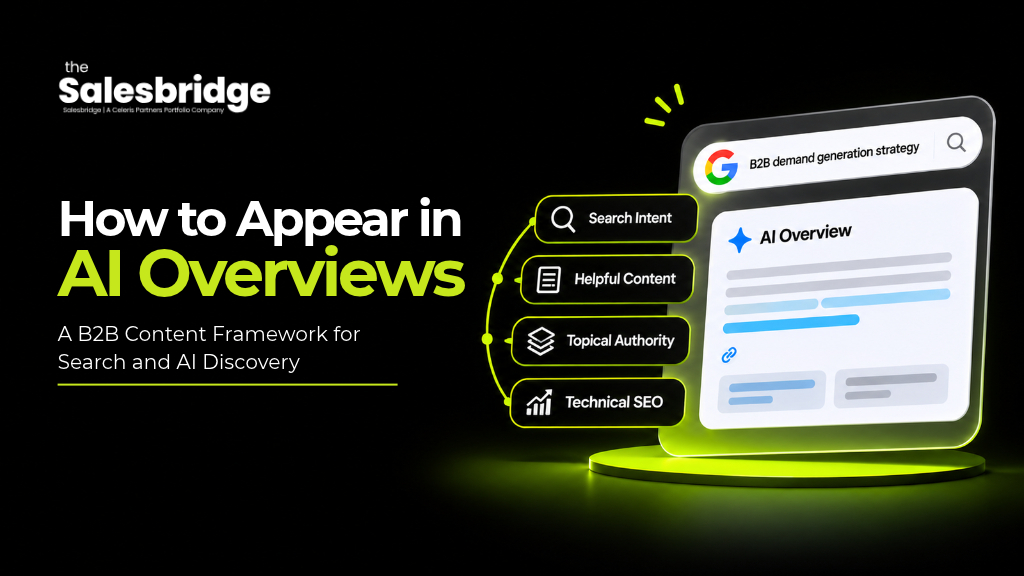
A practical B2B content framework should connect four elements: search intent, original information, technical accessibility and commercial relevance.
Start by identifying the questions your target audience asks before selecting a provider. Develop content that answers those questions with useful explanations, relevant examples and clear next steps.
Support the article with related resources and internal links. Keep service descriptions accurate and ensure that the content reflects the actual capabilities of your business.
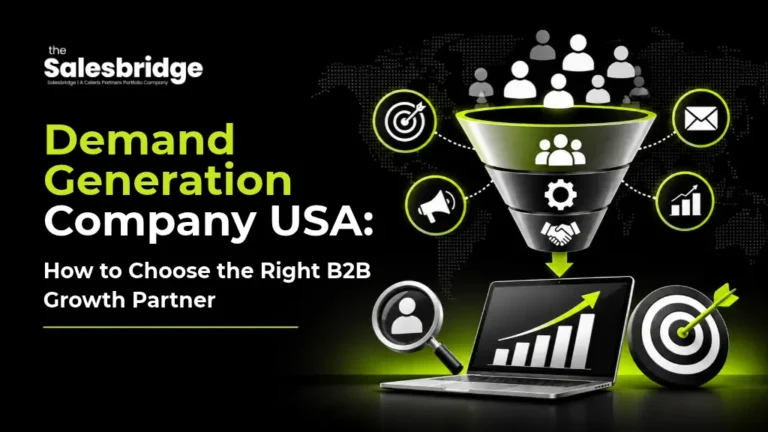
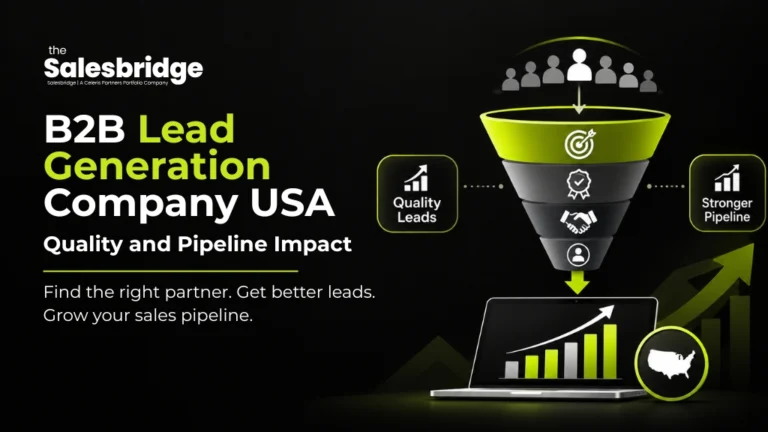
For example, a company offering B2B demand generation can publish a central guide explaining its approach and connect it with detailed resources covering B2B buyer intent signals, lead qualification and revenue operations.
This gives readers a connected information journey while strengthening the website’s coverage of related subjects.
One mistake is treating AI Overview optimisation as a separate technical shortcut. Creating unnecessary AI files, repeating phrases or adding structured data that does not reflect visible content will not guarantee inclusion.
Another is publishing large volumes of similar articles without adding original information. Pages that repeat the same definitions and advice provide little additional value.
Businesses also overlook technical accessibility. An excellent article may struggle to gain visibility if it is blocked from crawling, incorrectly canonicalised or disconnected from the website’s internal linking structure.
Finally, some brands focus entirely on AI citations and neglect conversions. Visibility should support a wider strategy that helps prospective customers understand the business, explore relevant services and make informed decisions.
Publish useful, original and well-structured content that addresses relevant search questions. Ensure your pages are crawlable, indexed and eligible to appear in Google Search. There is no guaranteed submission method or special optimisation that secures placement.
Yes. Google’s guidance confirms that foundational SEO practices remain relevant. Content quality, technical accessibility, internal linking, indexing and helpful information all contribute to eligibility and discoverability.
Structured data can help search engines understand page information when it accurately represents visible content. However, Google does not require special AI Overview schema, and adding markup does not guarantee inclusion.
There is no fixed timeline. Inclusion depends on Google’s systems, the search query, page eligibility, content relevance and other factors. Even indexed pages with strong SEO may not appear in an AI Overview.
Content that clearly answers relevant questions, provides reliable information, demonstrates expertise and adds original value can be useful. Detailed guides, practical explanations, comparisons, research and well-supported examples can all serve specific search needs.
Being discoverable across traditional search and AI-powered search experiences requires more than publishing additional articles. Businesses need a connected content strategy that addresses buyer questions, demonstrates expertise and supports the journey from discovery to enquiry.
The Salesbridge helps B2B businesses strengthen their digital growth through B2B demand generation, lead generation, SEO, content marketing, account-based marketing and revenue operations.
Whether your objective is to improve organic visibility, strengthen your content strategy or reach decision-makers across the USA and UK, The Salesbridge can help align digital marketing activities with your business growth priorities.
Connect with The Salesbridge to discuss a B2B search visibility and demand generation strategy built around relevant audiences and qualified business opportunities.