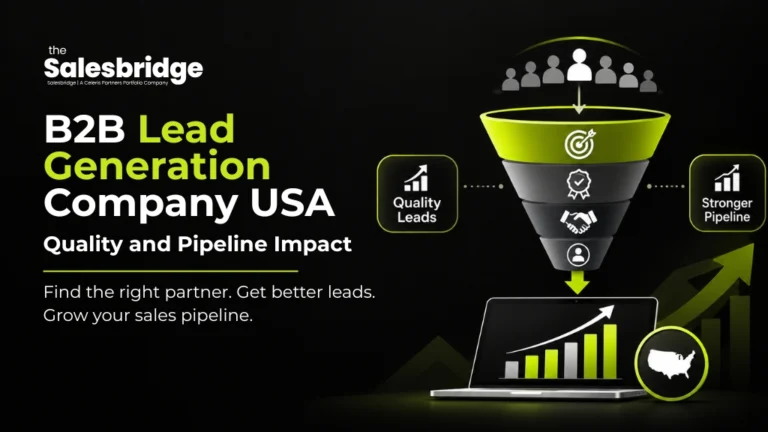
Choosing a demand generation company in the USA is an important decision for B2B businesses looking to build a consistent sales pipeline. The right partner can help identify potential buyers, reach relevant decision-makers, generate qualified leads and connect marketing activity with revenue opportunities. However, not every provider follows the same approach. Some focus mainly on contact acquisition, while others manage multiple stages of demand creation, prospect engagement and sales development.
For companies operating in competitive US and UK markets, selecting a growth partner requires more than comparing service lists or promised lead volumes. Businesses need to understand how a provider researches target audiences, plans campaigns, qualifies prospects and measures performance.
A suitable B2B growth partner should complement your internal team, address gaps in your existing marketing and sales process, and work towards measurable business objectives. This guide explains what to evaluate before choosing a demand generation partner and how to identify a programme that supports sustainable pipeline growth.
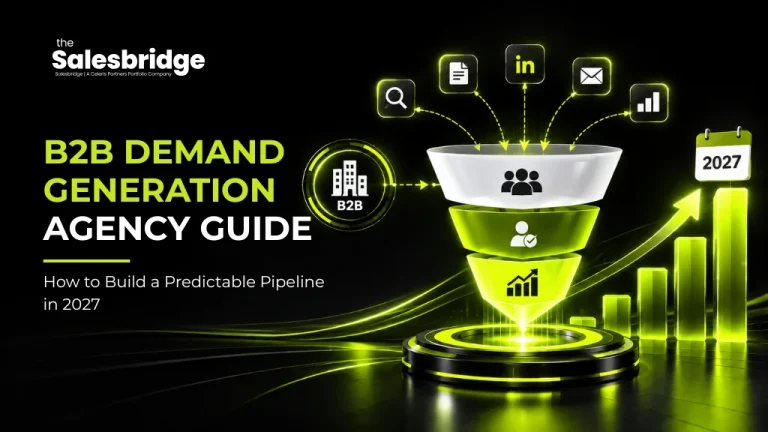
A demand generation company helps B2B businesses create awareness, engage potential buyers and generate opportunities throughout the buying journey. Its work can include audience research, content marketing, lead generation, email campaigns, account-based marketing, appointment setting and lead nurturing.
Unlike a provider focused only on collecting contact details, a broader demand generation partner considers how prospects discover a business, evaluate its offering and move towards a sales conversation.
For example, a US-based technology company entering the UK market may need to identify relevant industries, understand local decision-making roles and develop campaigns suited to that audience. A demand generation partner can coordinate these activities rather than treating each campaign as an isolated task.
The objective is to build a repeatable process that connects market engagement with qualified sales opportunities.
Demand generation and lead generation are connected, but they serve different purposes.
Demand generation builds awareness, interest and buying confidence among a relevant audience. It can involve educational content, search visibility, account-based marketing, webinars and targeted campaigns that help potential customers understand a business problem and available solutions.
Lead generation focuses on identifying prospects and converting relevant interest into contactable leads. This may happen through enquiry forms, gated resources, prospect research, email campaigns and other acquisition activities.
A business that invests only in lead capture may generate contacts without building enough awareness or trust. Conversely, awareness campaigns without a clear conversion and follow-up process may struggle to create measurable opportunities.
An effective B2B demand generation company should understand how these activities work together and recommend a suitable mix based on your growth objectives.
Campaign performance starts with audience accuracy. Before recommending channels or launching outreach, a provider should understand your ideal customer profile (ICP).
This includes industry, company size, business model, geography, revenue range and the problems your solution addresses. It should also identify the professionals involved in purchasing decisions, such as founders, department heads, procurement teams and technical decision-makers.
If your company targets both US and UK buyers, ask how the provider will account for differences in audience segments, messaging and market priorities.
A useful partner should be able to explain why particular accounts and buyer roles are included in a campaign, rather than simply sharing a large contact database.
Evaluate whether the company’s capabilities match the support your business actually needs.
Depending on your objectives, relevant services may include B2B lead generation, SDR as a Service, appointment setting, webinar registrations, data building, email marketing, content marketing and account-based marketing.
An integrated provider can help coordinate these activities, but a long service list alone does not demonstrate strategic capability. Ask how the services connect, who manages execution and which deliverables your internal team will receive.
The Salesbridge, for example, brings demand generation, digital marketing and revenue operations together as connected growth capabilities.
Lead volume should never be the only measure of campaign success.
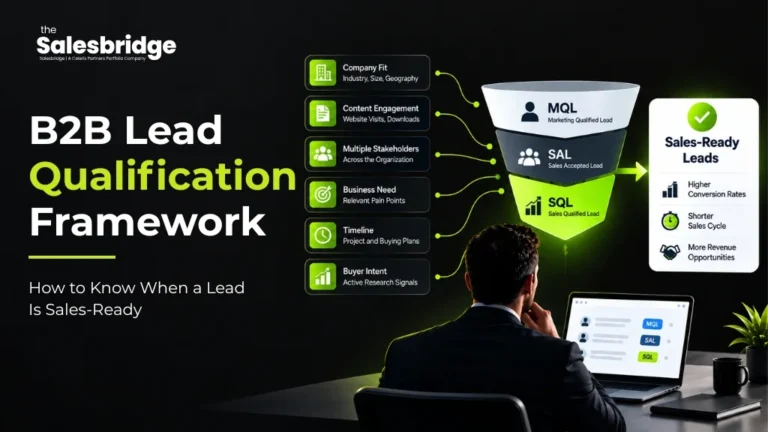
Ask how the provider defines a qualified lead and whether its criteria reflect your sales process. Relevant factors may include company fit, job role, business requirement, engagement, buying authority and potential purchasing timeline.
The qualification process should also establish how unsuitable records, duplicate contacts and invalid information are handled.
A documented B2B lead qualification framework can help marketing and sales teams agree on what should move forward for sales engagement.
A capable demand generation partner should recommend channels based on your audience and objectives, not simply promote the channels it already offers.
For some businesses, search engine optimisation and educational content may help attract buyers researching a solution. Others may need account-based campaigns, targeted email outreach, LinkedIn engagement or content syndication to reach specific decision-makers.
Ask how the provider develops messaging, tests campaign performance and adjusts targeting. It should be able to explain the role of each channel within the wider acquisition process.
Marketing activity becomes more valuable when sales teams can act on the opportunities it creates.
Your growth partner should understand lead routing, CRM processes, follow-up responsibilities and sales feedback. Without these elements, qualified prospects can remain unattended or lose interest before a meaningful conversation takes place.
Discuss how campaign leads will enter your CRM, who owns follow-up and how sales acceptance will be tracked. A connected B2B revenue operations process can improve visibility between marketing activity and sales outcomes.
Ask what the provider reports beyond impressions, clicks and contact volume.
Useful performance indicators include qualified leads, sales acceptance rate, booked meetings, meeting-to-opportunity conversion, cost per qualified lead and pipeline contribution.
The reporting process should make it possible to understand which audiences, messages and channels are producing meaningful results.
Agree on metric definitions before the engagement begins. This avoids situations where the provider reports campaign activity while your internal team is measuring actual sales opportunities.
The right service combination depends on your market, sales cycle and internal resources.
B2B lead generation and data building help identify relevant companies and decision-makers. Accurate prospect information provides the foundation for targeted acquisition and outreach.
SDR as a Service supports prospect research, personalised communication, lead qualification and follow-up. It can help companies increase sales development capacity without building every function internally.
Appointment setting focuses on arranging relevant sales conversations with potential customers who match agreed qualification requirements.
Account-based marketing helps businesses engage selected high-value accounts through coordinated, relevant campaigns designed around the organisations and stakeholders they want to reach.
Webinar registrations and content syndication can expand the reach of educational assets and connect businesses with audiences interested in relevant industry topics.
Digital marketing and SEO support online discovery, brand visibility and inbound acquisition. These activities can help build awareness before prospects are ready to speak with sales.
The important consideration is whether these services work together towards a defined business outcome.
There is no single price for demand generation services. Costs depend on campaign scope, target market, number of channels, data requirements, team involvement and reporting responsibilities.
Some providers charge monthly retainers, while others offer project-based engagements, dedicated SDR arrangements or performance-linked models. Advertising expenditure, technology subscriptions and external data costs may also be billed separately.
Instead of comparing proposals only by their monthly price, examine what each engagement includes. Understand the strategy, campaign execution, qualification responsibilities, reporting frequency and expected deliverables.
A lower-cost programme may provide limited contact acquisition, while a broader engagement may include research, outreach, sales development and operational support. Compare the commercial scope with the business outcome you expect.
Before signing an agreement, ask how the provider defines your target audience and builds its campaign strategy. Request examples of prospect data, qualification criteria and reporting formats.
Clarify which team members will manage the work, how often performance will be reviewed and how campaign improvements will be decided. Discuss CRM access, data ownership, contract terms and responsibilities for follow-up.
For campaigns targeting the USA and UK, ask how the provider approaches applicable privacy, data protection and outreach requirements in each market.
Where possible, start with a defined pilot programme. Agree on its scope, timeline and success measures before expanding the engagement.
A demand generation company helps B2B businesses create market awareness, engage potential buyers and generate qualified sales opportunities. Its services may include lead generation, content marketing, email outreach, account-based marketing, appointment setting and campaign management.
Evaluate its understanding of your ICP, service capabilities, lead qualification process, campaign strategy, sales alignment and reporting standards. Choose a provider that can connect its activities with your business objectives rather than focusing only on contact volume.
A lead generation agency generally focuses on identifying prospects and acquiring contact information. A demand generation company takes a broader approach by building awareness, engaging potential buyers and supporting the journey towards qualified sales opportunities. Some providers offer both capabilities.
Timelines vary according to the target market, sales cycle, campaign channels, data readiness and offer relevance. Initial engagement may appear before a consistent flow of qualified opportunities develops. Establish realistic milestones and review performance regularly.
Yes. A provider can support campaigns across both markets by developing relevant audience segments, identifying decision-makers and adapting campaign execution to each geography. Businesses should also ensure that outreach and data handling follow the applicable requirements in each market.
Choosing the right growth partner means finding a team that understands your audience, supports your sales process and connects campaign execution with measurable business objectives.
The Salesbridge helps B2B businesses strengthen their acquisition and revenue operations through lead generation, SDR as a Service, pay-per-qualified meetings, appointment setting, webinar registrations, data building, digital marketing and revenue operations.
Whether you want to reach decision-makers in the USA, expand into the UK or improve your existing pipeline generation process, The Salesbridge can help align your campaigns with your target audience and growth priorities.
Connect with The Salesbridge to discuss a B2B demand generation strategy built around qualified prospects, relevant sales conversations and sustainable pipeline growth.