Getting potential customers to agree to a sales conversation is not always easy. B2B buyers receive competing offers, research providers independently and involve multiple stakeholders before making purchasing decisions. For sales teams, finding the right decision-makers and turning initial conversations into scheduled meetings requires consistent prospecting and follow-up.
This is where B2B appointment setting services become valuable. They help businesses identify relevant prospects, initiate personalised conversations, assess interest and arrange meetings with potential customers who match their target audience.
However, more appointments do not automatically mean more revenue. A calendar filled with unsuitable prospects can consume valuable sales time without creating meaningful opportunities. Businesses in the USA and UK should therefore evaluate providers based on their targeting approach, qualification process, outreach quality and ability to connect meetings with pipeline outcomes.
This guide explains what to look for when selecting an appointment setting partner and how to determine whether its approach supports your sales objectives.
B2B appointment setting services help companies arrange sales meetings with potential business customers. The process typically involves identifying target accounts, researching decision-makers, initiating outreach, qualifying interest and scheduling conversations with the client’s sales representatives.
Unlike a basic contact-list provider, an appointment setting partner participates in the early stages of sales development. Depending on the engagement, it may manage prospect research, email outreach, LinkedIn engagement, phone conversations, follow-ups and meeting coordination.
For example, a technology company selling enterprise software may want to connect with IT directors, operations heads or business executives. An appointment setting team researches suitable organisations, identifies relevant stakeholders and starts conversations around the business problems its solution addresses.
The objective is not simply to put meetings on a calendar. It is to create relevant sales conversations that have a genuine reason to take place.
Lead generation and appointment setting support different stages of customer acquisition.
B2B lead generation focuses on attracting or identifying potential customers and collecting relevant prospect information or expressions of interest. This may happen through content campaigns, paid advertising, email marketing, prospect research and other acquisition activities.
B2B appointment setting takes the process further by engaging selected prospects and arranging conversations with the sales team.
A lead may download a guide or respond to an enquiry form without being ready to speak with sales. An appointment setting programme works towards establishing a relevant conversation and confirming whether the prospect meets agreed meeting criteria.
Businesses can use both approaches together. Lead generation builds the prospect pool, while appointment setting helps convert suitable prospects into sales conversations.
Successful outreach starts with knowing which businesses are worth approaching. A provider should understand your industry, company size, target geography, business requirements and ideal customer profile.
It should also identify the roles involved in evaluating your solution. Depending on the offering, these may include founders, CEOs, marketing directors, procurement leaders or IT decision-makers.
For US and UK campaigns, targeting should reflect the differences between the markets rather than treating them as one audience.
A strong appointment setting process uses relevant communication rather than sending identical messages to large contact lists.
Depending on the target audience, campaigns may combine business email outreach, LinkedIn engagement and phone-based prospecting. Messaging should reflect the prospect’s role, company context and potential business requirements.
Personalisation should go beyond inserting a company name into a template. It should explain why the conversation may be relevant to that particular business.
Before a meeting is scheduled, the prospect should be evaluated against agreed qualification criteria.
These may include company fit, professional responsibility, business need, interest in the solution and willingness to discuss the requirement.
Follow-ups are equally important. Prospects may need additional information or time before accepting a meeting. A structured process helps maintain communication without making outreach repetitive or intrusive.
Once a prospect agrees to a conversation, the appointment setting team should coordinate the schedule and provide the sales representative with useful context.
The handoff should include the prospect’s role, company details, reason for the meeting, previous interactions and any relevant qualification information.
This allows the salesperson to prepare instead of restarting the conversation from the beginning.
A booked appointment and a qualified sales meeting are not necessarily the same thing.
Before hiring a provider, establish a written definition of what qualifies as a successful meeting. This prevents disagreements about deliverables and ensures that both teams are working towards the same outcome.
A useful qualification standard should consider whether the company matches your target market, whether the attendee has a relevant decision-making or influencing role, and whether there is a business reason for the discussion.
It should also establish whether the prospect understands the purpose of the meeting and has agreed to attend.
Frameworks such as BANT—Budget, Authority, Need and Timeline—can help structure qualification where appropriate. However, the criteria should reflect your actual sales process rather than forcing every prospect into a rigid checklist.
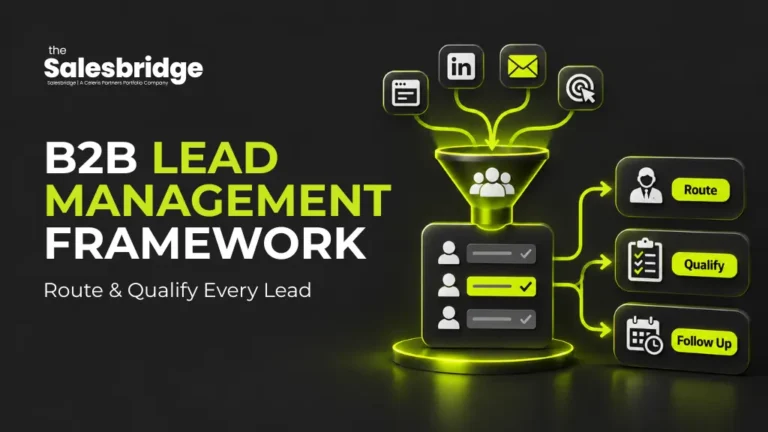
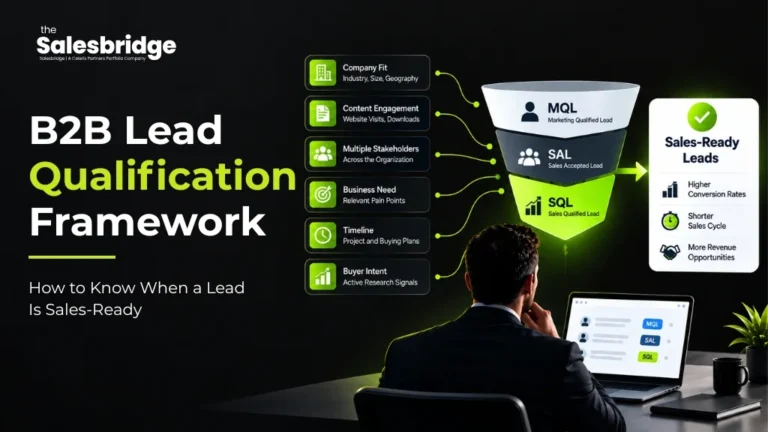
The B2B lead qualification framework provides further guidance on distinguishing engagement from sales readiness.
The right engagement depends on your internal sales capacity, campaign requirements and preferred level of outsourcing.
An outsourced team manages prospecting and meeting generation on behalf of your company. This can help businesses increase outreach capacity without building an entire internal appointment setting function.
A dedicated or managed sales development function handles activities such as prospect research, personalised outreach, qualification and follow-up. This model suits companies that need ongoing support across early-stage sales development.
Under this model, payment is linked to meetings that satisfy agreed qualification criteria. Businesses should define exactly what counts as a billable meeting, including attendance requirements and exclusions.
The Salesbridge offers these approaches as part of its B2B demand generation services, allowing businesses to select support based on their prospecting and sales development requirements.
The number of meetings booked is only one part of programme performance. Businesses should examine what happens before and after the meeting.
Meetings booked: Shows the volume of scheduled sales conversations generated during a reporting period.
Meeting show rate: Measures how many scheduled appointments actually take place. This helps identify issues with prospect commitment, reminders or scheduling.
Qualified meeting rate: Shows how many meetings meet the qualification standards agreed upon before campaign launch.
Meeting-to-opportunity conversion: Measures how many completed meetings progress into genuine sales opportunities.
Cost per qualified meeting: Connects programme expenditure with the number of meetings that meet the agreed criteria.
Pipeline contribution: Tracks the value of sales opportunities associated with appointment setting activity.
These metrics should be reviewed together. A campaign producing fewer but more relevant meetings may deliver better commercial value than one generating a high volume of poorly matched appointments.
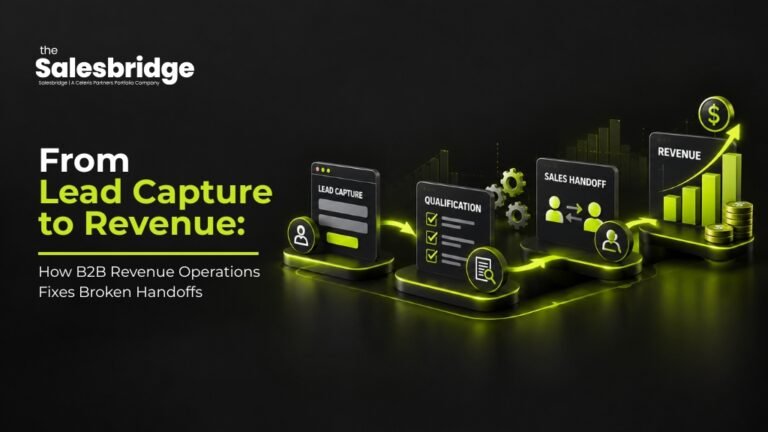
Connecting these results with B2B revenue operations and lead handoffs also helps sales and marketing teams maintain visibility after meetings are scheduled.
Before signing an agreement, ask how the provider researches target accounts, verifies contact information and trains its appointment setting team.
Understand which outreach channels are included, who approves campaign messaging and how prospect responses are handled. Ask how a qualified meeting is defined, how no-shows are treated and what information your sales team receives before each appointment.
You should also review the reporting process, CRM responsibilities, data ownership, campaign timelines and pricing structure.
Request sample reports or a proposed campaign workflow. Where practical, consider a pilot with agreed objectives before committing to a larger programme.
For companies operating across the USA and UK, clarify how the provider approaches applicable data protection, privacy and outreach requirements in each market.
They typically include target account research, decision-maker identification, personalised outreach, prospect qualification, follow-ups, meeting scheduling and sales handoffs. The exact scope depends on the provider and service agreement.
Pricing varies according to target market, campaign complexity, outreach channels, team requirements and qualification standards. Common models include monthly retainers, dedicated SDR arrangements and pay-per-qualified-meeting programmes. Compare deliverables and meeting definitions before evaluating price.
A qualified appointment involves a relevant company and attendee, a clear reason for the discussion and agreement from the prospect to attend. Additional requirements may include business need, buying authority or a defined purchasing timeline.
Yes, provided the business has a clear offering, a defined target audience and the capacity to handle incoming sales meetings. Outsourcing can provide prospecting support without requiring a full internal appointment setting team.
The timeline depends on audience size, data readiness, offer relevance, sales cycle and outreach channels. Initial campaign activity may produce engagement before a consistent flow of qualified meetings develops. Providers should agree on realistic launch milestones and review performance regularly.
Reaching the right decision-makers is only the beginning. Businesses need a consistent process that connects prospect research, personalised outreach, qualification and sales conversations.
The Salesbridge helps B2B companies strengthen their sales development through B2B appointment setting services, SDR as a Service, pay-per-qualified meetings, lead generation and demand generation campaigns.
Whether you want to reach decision-makers in the USA, expand into the UK or increase your existing sales team’s prospecting capacity, The Salesbridge can help align outreach with your target accounts and business objectives.
Connect with The Salesbridge to discuss an appointment setting approach focused on qualified meetings and meaningful pipeline opportunities.