Generating B2B leads is only one part of building a predictable sales pipeline. What happens after a prospect submits an enquiry, downloads a resource or responds to an outreach campaign can determine whether that opportunity progresses or gets overlooked. When leads remain unassigned, reach the wrong sales representative or receive inconsistent follow-up, businesses lose valuable opportunities despite investing in marketing and prospect acquisition.
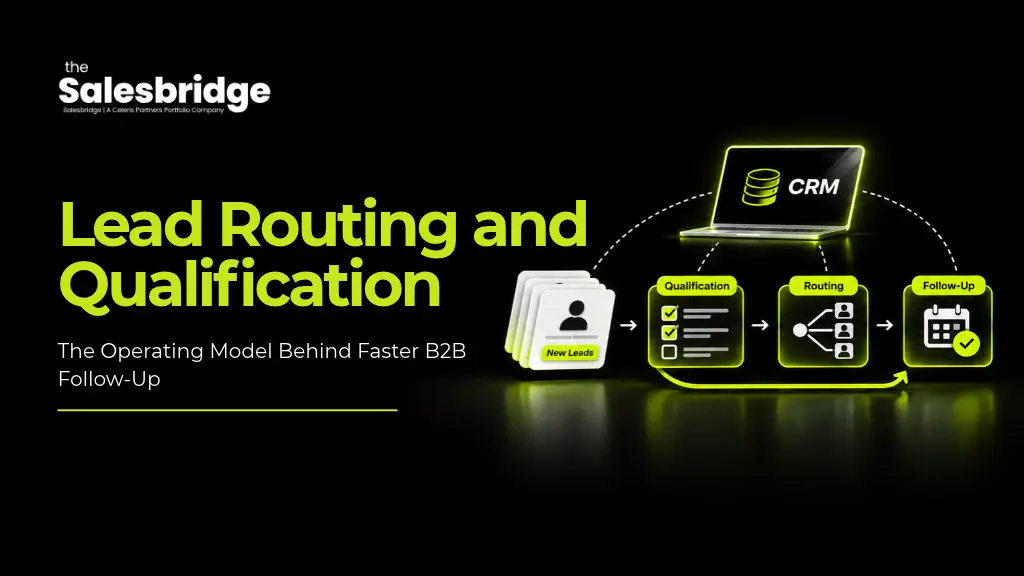
This is why lead routing and qualification should operate as one connected process. Qualification determines whether a prospect meets the business’s requirements, while routing assigns that prospect to the appropriate sales representative or team. Together, they help B2B organisations improve response times, establish accountability and create a more consistent sales experience.
For companies targeting buyers in the USA and UK, a structured operating model becomes especially important when managing multiple industries, territories, products and sales representatives. This guide explains how to build a practical process that connects lead evaluation, CRM assignment and timely sales follow-up.
Lead qualification is the process of evaluating whether a prospect is relevant to your business and potentially suitable for sales engagement. It considers factors such as company size, industry, job role, business requirements, buying interest and purchasing readiness.
Lead routing determines where that prospect should go next. Based on predefined rules, the CRM assigns the lead to a specific sales representative, team or queue.
For example, a software company may receive enquiries from small businesses, mid-market organisations and enterprise accounts. Its qualification process identifies which enquiries match its target customer profile. Its routing rules then assign enterprise prospects to the enterprise sales team and smaller accounts to the appropriate sales representatives.
When these processes work together, businesses can reduce manual handling, prevent ownership confusion and improve the consistency of sales follow-up.
Many organisations invest in generating enquiries but rely on manual processes to manage them. Leads arrive through website forms, webinars, email campaigns, paid advertising and outbound activities. Without clear ownership rules, sales teams may not know who should handle each prospect.
This creates several operational problems. High-intent enquiries can wait in shared inboxes, multiple representatives may contact the same account, and prospects can receive irrelevant communication from teams unfamiliar with their requirements.
A structured lead routing process establishes responsibility from the moment a lead becomes eligible for sales engagement. It also gives managers visibility into assignment delays, unhandled enquiries and follow-up performance.
The objective is not simply to distribute leads evenly. It is to make sure every eligible prospect reaches the right person with sufficient context to take the next action.
The process begins when a prospect enters your system through a website enquiry, demo request, campaign response, webinar registration or another acquisition channel.
Before assigning ownership, validate the available information. Check whether the contact details are usable, identify duplicate records and confirm that the enquiry contains enough information for evaluation.
Company domain, job title, country, industry and company size can provide useful context. Where appropriate, data enrichment can help complete missing firmographic information.
Poor-quality records should not automatically enter the same sales queue as genuine enquiries. Establish a review or correction process for incomplete and questionable submissions.
Qualification should begin with a clear definition of the businesses your organisation wants to reach.
Your Ideal Customer Profile (ICP) should describe relevant industries, company sizes, geographic markets, business models and operational requirements. Contact-level criteria should identify the job functions and seniority levels that influence purchasing decisions.
A prospect from a relevant company may still be unsuitable if their role or requirement does not match your offering. Similarly, a contact with strong engagement may not represent a commercially relevant account.
A structured B2B lead qualification framework helps teams evaluate fit, engagement, business need and buying readiness before moving prospects into sales.
Lead scoring helps prioritise prospects using predefined characteristics and behaviours. It can combine demographic or firmographic fit with engagement and buying signals.
For example, a company matching your ICP may receive positive fit points, while a relevant decision-maker requesting a product demonstration may demonstrate stronger buying intent.
However, scoring and qualification are not identical. A high score can indicate priority, but it should not automatically replace human review when important business information is missing.
Use clear qualification categories such as:
These categories help determine the next action rather than treating every new contact as an immediate sales opportunity.
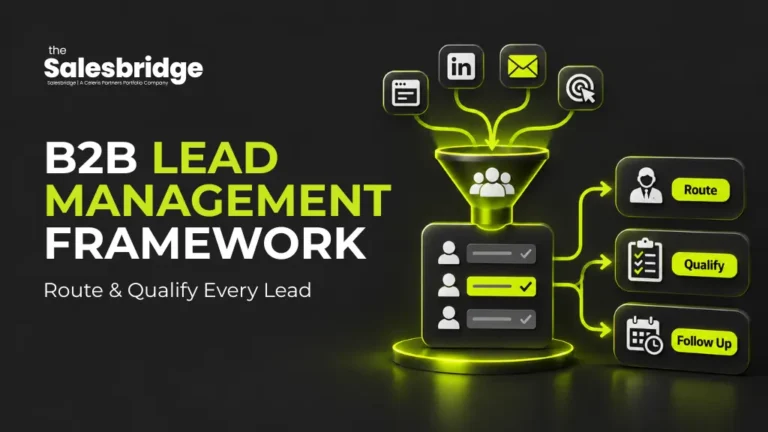
Once a lead meets the required criteria, routing rules determine its owner. The assignment method should reflect how your sales organisation operates.
Territory-based routing assigns prospects according to geography, such as US regions or UK territories. This is useful when representatives specialise in particular markets.
Account-based routing connects a new contact with the existing owner of the company account. This helps maintain continuity when several stakeholders from the same organisation engage with your business.
Round-robin distribution rotates eligible leads among representatives. It can work well when team members handle similar markets and have comparable responsibilities.
Product or segment-based routing directs enquiries to specialists based on the product, service, company size or industry involved.
Many B2B teams combine these methods. Existing account ownership and specialist requirements can take priority, followed by territory or segment rules, with round-robin distribution used for remaining eligible leads.
Assigning a lead does not guarantee that a sales representative will contact the prospect.
The handoff should trigger a clear next action. This may include a CRM notification, task creation, email alert or entry into an approved follow-up workflow.
Define response expectations according to lead source and buying intent. A direct demo request may require faster attention than a contact who has downloaded an introductory resource.
Sales representatives should also receive useful context, including the prospect’s company, role, acquisition source, stated requirement and previous interactions.
This reduces the need to repeat discovery questions and helps make the first conversation more relevant.
Lead routing and qualification should be reviewed regularly rather than treated as a one-time CRM configuration.
Track which leads were assigned, whether the correct owner received them, how quickly the first response occurred and what happened after contact.
Sales feedback is particularly important. If representatives repeatedly reject leads from a particular campaign or segment, review the qualification criteria and targeting assumptions.
A documented feedback loop helps marketing, sales and revenue operations teams improve the process using actual outcomes.
A CRM-based routing workflow should begin with documented assignment logic.
First, define which records are eligible for sales assignment. Next, identify existing account ownership and apply any specialist or territory requirements. After selecting the appropriate team, determine how individual representatives receive leads.
The workflow should also include exception handling. What happens when no territory matches, the assigned representative is unavailable or a required CRM field is missing?
A fallback owner or central review queue prevents eligible leads from becoming unassigned records.
Finally, document the rules and test them using different scenarios before activating the workflow. Review the results after implementation to identify incorrect assignments, repeated exceptions and outdated ownership information.
The aim is to create a process that employees can understand and managers can maintain.
Measuring performance requires more than counting the number of leads assigned to sales.
Time to assignment measures how long an eligible lead takes to receive an owner. It identifies delays within the routing workflow.
First response time measures the time between lead eligibility or submission and the first meaningful sales interaction. Keep this separate from assignment time.
Lead acceptance rate shows how many routed leads sales representatives accept for further engagement. A consistently low rate may indicate targeting or qualification problems.
Misrouting rate identifies leads assigned to the wrong representative, territory or team.
Unassigned lead volume reveals records that have not reached an accountable owner.
Lead-to-opportunity conversion measures how effectively qualified leads progress into genuine sales opportunities.
Follow-up completion rate helps establish whether assigned leads receive the actions required by the sales process.
Review these metrics by lead source, territory, company segment and sales team. This makes it easier to identify where the process is working and where operational changes may be needed.
One common mistake is distributing every new contact directly to sales without evaluating its relevance. This fills representative queues with prospects who may not match the company’s target audience.
Another problem is relying entirely on round-robin assignment. Equal distribution does not necessarily mean appropriate distribution when representatives have different territories, skills or account responsibilities.
Outdated CRM records can also undermine automated workflows. Incorrect company information, missing ownership fields and duplicate contacts may send leads through the wrong assignment path.
Finally, many organisations measure assignment speed without checking whether the assigned representative actually follows up. Routing and response management must be connected through clear ownership, service expectations and reporting.
Lead qualification evaluates whether a prospect meets the business’s requirements for further engagement. Lead routing assigns that prospect to the appropriate sales representative, team or queue. Qualification determines eligibility and priority, while routing determines ownership and the next destination.
Automated lead routing uses CRM rules and workflow conditions to assign eligible leads based on factors such as territory, company size, industry, product interest, account ownership or representative availability. The system can also trigger notifications and follow-up tasks.
There is no universal method. Territory-based routing works for geographically organised teams, account-based routing supports existing customer relationships, and round-robin distribution suits teams with similar responsibilities. Many organisations combine these approaches.
Response expectations should depend on the lead source, buying intent and internal sales capacity. Direct enquiries such as demo requests generally deserve higher priority than early-stage content engagement. Businesses should establish and monitor clear response-time expectations for each lead category.
Start by defining your ICP and qualification criteria. Maintain accurate CRM data, establish documented ownership rules, automate appropriate assignments and create a clear follow-up process. Regularly review sales acceptance, response times and opportunity conversion to improve the framework.
A reliable lead management process requires more than collecting prospect details. Businesses need accurate qualification, clear ownership, structured routing and consistent follow-up to turn marketing activity into meaningful sales conversations.
The Salesbridge helps B2B organisations strengthen their acquisition and revenue processes through B2B lead generation, lead qualification, appointment setting, SDR as a Service and Revenue Operations support.
Whether your business is experiencing delayed lead responses, inconsistent CRM assignments or disconnected marketing and sales workflows, The Salesbridge can help you build a more organised approach to managing prospects and supporting pipeline growth.
Connect with The Salesbridge to discuss a lead management and revenue operations approach aligned with your sales objectives.