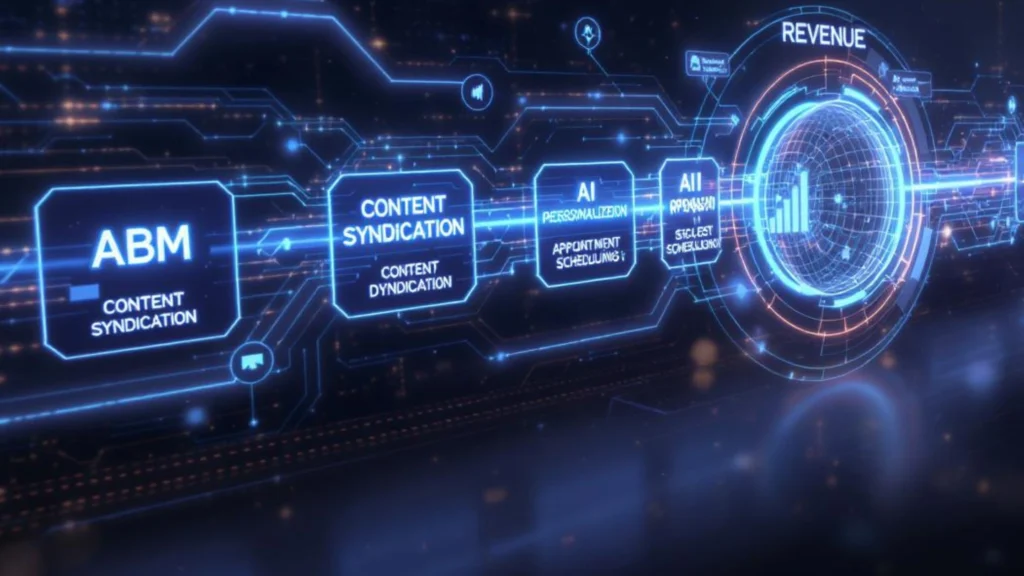
Pipeline Over Leads: The 2026 Operating System for B2B Demand Generation
B2B demand generation in 2026 has crossed a critical threshold: the old playbook of chasing leads is officially broken, and the teams winning today are those who have rebuilt their entire operating model around pipeline quality. For years, marketing dashboards celebrated MQL volume, contact lists, and form fills. Today, those vanity metrics are quietly being retired. What’s replacing them is a precision-driven, pipeline-first demand generation system one powered by artificial intelligence, intent data, account-based strategies, and an unrelenting focus on revenue outcomes.
This is not a minor tactical refresh. It is a structural rethink of how B2B organizations generate, qualify, and convert demand in a buying environment that has fundamentally changed.
Why the Old Lead-Generation Model Is Failing in 2026
The signs of the old model’s collapse have been building for years, but February 2026 data makes the picture undeniably clear. According to Gartner’s research, 75% of B2B buyers now complete the majority of early-stage evaluation without ever speaking to a vendor. Separately, Forrester’s Buyers’ Journey Survey reveals that 41% of buyers already have a single vendor in mind before they ever raise their hand and 92% arrive with a shortlist already formed.
What this means in practice is devastating for volume-based lead generation: by the time a buyer fills out your form, the decision is nearly made. You are not influencing a prospect at that moment, you are simply confirming a preference they formed weeks or months earlier, somewhere else, without you.
The implications are profound. Marketing teams that continue to measure success by the number of leads generated are measuring the wrong thing entirely. The real battle is happening before intent is ever declared in the brand preference phase, in the dark social conversations, in the AI-powered search results and peer recommendations that shape a buyer’s shortlist long before a sales conversation begins.
The 2026 B2B Demand Generation Operating System: Five Core Pillars
Pipeline Quality Over Lead Quantity
The most defining shift of 2026 is the abandonment of MQL-centric thinking. Revenue Operations teams are now aligning marketing directly to pipeline contribution, not top-of-funnel volume. Boards and CFOs are demanding accountability: every campaign must trace a credible path to closed revenue.
This shift requires marketers to instrument campaigns differently. Instead of tracking how many contacts entered a nurture sequence, high-performing teams are asking: how many qualified pipeline opportunities did this campaign influence? What was the pipeline velocity? How did conversion rates change from first touch to SQL?
The metric overhaul is uncomfortable for teams accustomed to reporting lead counts, but it is the only honest measure of marketing’s commercial impact.
AI-Powered, Human-Led Demand Workflows
Artificial intelligence is no longer an experimental add-on to demand generation it is the infrastructure. In February 2026, leading B2B marketing organizations are deploying AI across the entire demand funnel: predictive account scoring, behavioral intent analysis, dynamic content personalization, automated lead routing, and multi-variant message testing at a scale no human team could replicate.
What separates the leaders from the laggards is not whether they use AI, but how intentionally they use it. The most effective teams embed AI agents directly into targeting, routing, and personalization workflows not just in content creation. AI’s core strength here is prediction: identifying which accounts are showing early buying signals, which prospects are most likely to engage, and which messages will resonate based on firmographic and behavioral data. Teams integrating AI deeply into their workflows are outperforming peers by a factor of three to five times, according to recent benchmarking data.
The critical caveat is that AI amplifies strategy and does not replace it. Human judgment remains essential for brand positioning, relationship development, and strategic storytelling. The operating system of 2026 is AI-powered and human-led.
Account-Based Marketing as the Default Architecture
ABM has officially graduated from being a niche campaign type to the foundational architecture of B2B demand generation. In 2026, it is not a question of whether to use ABM, it is a question of how to tier it intelligently across your target account universe.
The most effective ABM programs in 2026 are structured in three layers: one-to-one engagement for strategic enterprise accounts, one-to-few programs for high-intent account clusters, and one-to-many for scalable brand relevance across the broader addressable market. This tiered model enabled by better intent data and clearer buying group intelligence allows teams to concentrate their highest-touch resources where they matter most while maintaining broad market presence efficiently.
According to Demand Gen Report’s ABM Benchmark Survey, 68% of B2B marketers report ABM delivers higher engagement and stronger ROI than any other marketing initiative. More than 70% are now using intent data to prioritize their target accounts. The organizations taking this further in 2026 are combining automated account scoring, AI-driven analytics, and dynamic content customization to run ABM at a scale that would have been impossible even two years ago.
Intent Data and First-Party Signal Intelligence
Third-party cookies are gone. With them went the foundation of traditional retargeting and audience building strategies that many B2B teams relied upon for years. The organizations that recognized this transition early invested aggressively in first-party data infrastructure, and that investment is now paying significant dividends.
In 2026, website visitor identification has become one of the most important capabilities in the B2B demand generation toolkit. The statistical reality driving this is stark: on average, only 2% of B2B website traffic converts into an identifiable lead. The remaining 98% companies actively researching your category, reading your content, comparing your solution leave without a trace under legacy tracking models. Modern identification platforms now surface these invisible accounts, providing marketers and sales teams with company-level behavioral data that can inform outreach, account prioritization, and content sequencing.
Intent data extends beyond the website. Third-party intent signals topic-based research activity, review site engagement, competitor comparison behavior allow teams to identify accounts in active buying cycles before they ever interact directly with your brand. Combining these signals with first-party behavioral data creates a rich, real-time picture of buyer readiness that transforms demand generation from reactive to genuinely proactive.
Brand Preference as a Pipeline Driver
Perhaps the most counterintuitive shift in the 2026 demand generation operating system is the re-elevation of brand building as a core pipeline driver. In an era obsessed with performance marketing attribution, many B2B organizations starved their brand budgets in pursuit of trackable bottom-of-funnel conversions.
The data now shows the cost of that decision. Because buyers form shortlists before they declare intent, the organizations that dominate those shortlists are the ones that invested consistently in brand awareness, authority, and trust over time. High-authority content partnerships, creator-led campaigns, trust-based thought leadership, and consistent messaging across every digital touchpoint are the inputs that determine whose name appears on a buyer’s consideration list before a single ad dollar fires.
CMOs in 2026 are rebuilding the case for brand investment internally, demonstrating to non-marketing stakeholders how brand programs support sales enablement, accelerate pipeline velocity, and protect competitive positioning. The argument is no longer philosophical; it is backed by conversion rate data that shows accounts with prior brand exposure close faster and at higher values.
The Metrics That Define the 2026 Demand Generation Leader
The operating system transformation is not complete until the measurement framework changes too. The B2B demand generation leaders of 2026 are tracking pipeline contribution by channel, influenced pipeline velocity, account engagement scores across buying groups, content-to-pipeline correlation, and the percentage of target accounts showing active intent signals each quarter.
What they have largely stopped tracking as primary KPIs: raw lead volume, email open rates in isolation, and unqualified MQL counts. These metrics still exist on dashboards, but they have been demoted to diagnostic indicators rather than success metrics.
Building the 2026 Demand Engine: Where to Start
For teams in the process of transitioning to the pipeline-first operating system, the entry points are clear. Start by auditing your current metrics framework and identifying where lead volume thinking is distorting investment decisions. Then align with your sales and revenue operations counterparts on a shared definition of pipeline quality and the criteria for a sales-ready account. Build or procure intent data capabilities both first-party through your website and CRM, and third-party through established data providers. Layer AI-powered scoring on top of that data to prioritize where marketing attention goes. And begin the longer-term investment in brand programs that will condition your market before buyers ever signal active intent.
The B2B demand generation leaders of 2026 did not arrive here by adopting a new tactic. They rebuilt their operating system from the ground up aligning technology, data, content, and human judgment around a single shared objective: qualified, predictable, scalable pipeline.
Where This All Leads
The 2026 B2B demand generation operating system is not a trend. It is the new competitive baseline. As buying groups grow larger, sales cycles stretch longer, and AI reshapes how buyers research and evaluate vendors before ever speaking to a sales team, the organizations that thrive will be those that stopped counting leads and started engineering pipeline. The shift from volume to precision, from lead capture to brand authority, from siloed campaigns to orchestrated account intelligence, is the transformation that separates the teams building durable, predictable revenue engines from those still optimizing yesterday’s funnel.
The operating system is available to every B2B organization willing to rebuild. The question is whether you start now or wait until the gap is too wide to close.